The “Quiet Launch” Playbook: Using Liinks to Test New Offers Before You Announce Them Anywhere

You know that feeling when you have a new offer idea and your brain immediately jumps to:
“I need a logo, a full website, a 12-email sequence, a countdown timer, and maybe a therapist.”
Or, the opposite:
“I’ll just… never launch this and keep it in my notes app forever.”
There is a third option: the quiet launch.
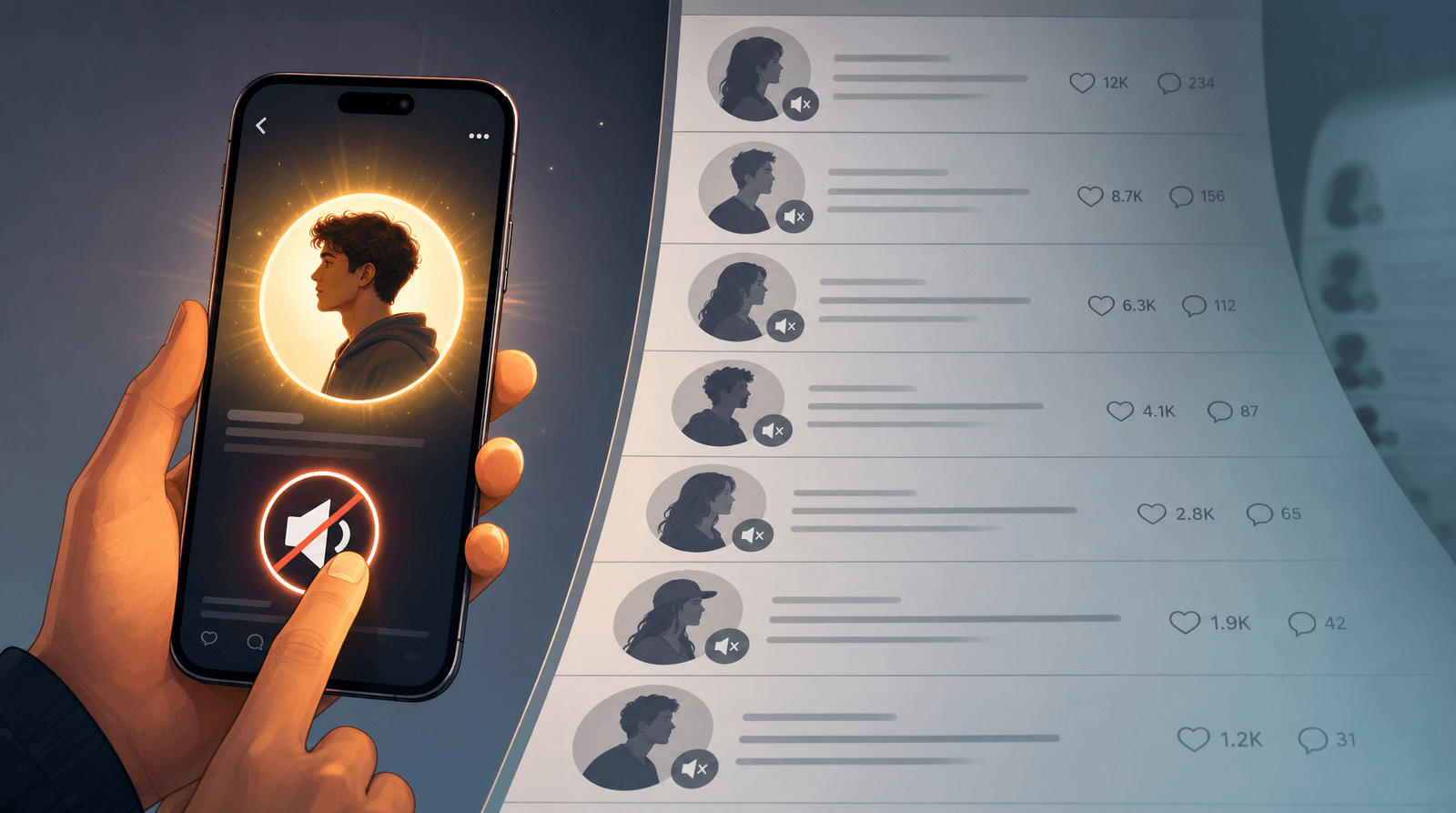
A quiet launch is where you test an offer silently—no big announcement, no launch week, no confetti—just a simple setup, a few strategic clicks, and real data about what people actually want.
And your secret weapon for doing this without rebuilding your entire business every time? Your link in bio—specifically, a flexible, good‑looking setup using Liinks.
This playbook will walk you through how to quietly test new offers using your Liinks page before you tell the world about them.
Why Quiet Launches Are a Power Move
Quiet launches are like soft openings for restaurants: you get to see what works, what flops, and what needs seasoning before you invite the whole internet over for dinner.
Why this matters for creators and small businesses:
- You stop guessing and start measuring. Instead of “I think people would love this,” you get “This link got a 7% click‑through rate and 12 signups in a week.”
- You protect your confidence. If an idea flops quietly, you tweak it. No public failure, no “Well, that was embarrassing” launch recap.
- You move faster. No need to build a full funnel or website every time. A bio link, a checkout or form, and you’re in business.
- You find your high‑intent people. The ones who go out of their way to click your bio and explore? Those are your most ready-to-buy humans. Quiet launches are built for them.
If you’ve read about building a high-intent hub in The High-Intent Link in Bio: How to Attract People Who Are Ready to Buy (Not Just Browse), this is basically that idea’s experimental cousin.
Step 1: Decide What You’re Actually Testing
A quiet launch is not “throw a random button on your Liinks page and hope.” You want a clear hypothesis.
You’re usually testing one (or more) of these:
- Offer idea – Do people care about this thing at all?
- Example: “1:1 TikTok audits for small salons.”
- Positioning/angle – Which version of the idea lands better?
- Example: “TikTok Audit for Local Salons” vs. “Turn TikTok Views into Booked Appointments.”
- Price point – Will people buy at $27, $47, or $97?
- Format – Do they prefer a live workshop, downloadable guide, or 1:1 session?
Pick one primary variable to start with. Quiet launches work best when you’re not changing 17 things at once and then trying to guess what made the difference.
Write your hypothesis in one sentence:
“If I add a simple link on my Liinks page for a 60‑minute TikTok audit at $97, at least 3 people will buy in the next 14 days without me hard-selling it.”
Now you know what you’re looking for.
Step 2: Build a Tiny, Good‑Looking Offer Block on Liinks
Your quiet launch doesn’t need a full sales page. It needs one clear, compelling block on your Liinks page that does three jobs:
- Says what the offer is
- Says who it’s for
- Gives a simple next step
What to include in your Liinks block
Think of it as a mini sales card:
- Short, specific title
- “60-Min TikTok Audit for Local Salons”
- “Notion Template: Weekly Content Planner for Busy Creators”
- One-sentence benefit
- “Walk away with a 30-day content plan and hooks tailored to your audience.”
- Micro bullets (2–3 max)
- “Screen-recorded review of your last 10 posts”
- “Custom content calendar for the next 4 weeks”
- “Simple checklist to improve hooks + captions”
- Clear CTA
- “Book your audit”
- “Get the template”
- “Join the interest list”
If you need help with non-cringe CTAs, bookmark The Non-Awkward Ask: How to Use Liinks CTAs to Sell More Without Feeling Like a Walking Ad for later.
Make it visually stand out (without screaming)
Because Liinks is design‑forward, you can:
- Use a contrasting button color for your quiet launch offer
- Add a small icon or emoji that hints at the format (📹, 🧾, 🎧, 📅)
- Place it in a featured section near the top, but not necessarily in the #1 spot (we’re being quiet, not invisible)
Think: “soft highlight,” not “blinking neon sign.”
Step 3: Connect It to the Simplest Possible Next Step
Quiet launches die where friction begins.
If someone taps your offer and then hits:
- a confusing website
- a form with 19 required fields
- or a checkout that looks sketchy
…they’re gone.
For a quiet launch, your next step should be as simple as humanly possible:
- For paid offers:
- Use a direct payment link (e.g., Stripe Payment Link, Shopify Starter, Lemon Squeezy, Gumroad).
- Or a simple product page from your existing shop.
- For services:
- Link to a booking form (e.g., Calendly, TidyCal, Acuity Scheduling).
- Or a short Typeform/Google Form + payment link combo.
- For not-ready-yet offers:
- Use an email waitlist form (ConvertKit, Flodesk, MailerLite, etc.).
- Or a simple “interest list” Google Form.
Your quiet launch stack can literally be:
Liinks block → Stripe payment link → Thank you email.
No funnel software. No 27-page sales letter. Just: “Here’s the thing → here’s where to get it.”
If you’re already running a no-website setup, this pairs perfectly with the approach in The No-Website E‑Commerce Stack: Selling Digital and Physical Products Using Only Liinks + Payment Links.
Step 4: Place Your Quiet Offer Where the Right People See It
This is where the “quiet” part gets strategic.
You’re not blasting this everywhere yet… but you are placing it where your warmest, most curious people naturally go.
Smart placement ideas on your Liinks page
- Just below your main hero action
If your top button is “Start Here” or “Free Training,” place your quiet launch offer in the next 1–3 slots. - Inside a relevant content bucket
If you use content buckets (courses, services, freebies), tuck your quiet launch under the most relevant one, like “Services” or “For Creators.” (If that sentence made you think “content what now?”, see Stop Guessing, Start Grouping: How to Use Content Buckets to Organize Your Liinks Page (So People Actually Find Stuff).) - On a cloned or alternate Liinks layout
You can create a variation of your Liinks page for a specific platform or experiment, and only link that version from certain bios or campaigns.
Light, non-shouty traffic sources
You don’t need a full promo campaign. Try:
- Adding a casual mention in a caption: “P.S. I’m quietly testing a new 1:1 audit—peek the bio if you’re into that.”
- Dropping it into Stories once or twice with a soft CTA: “Testing something new—details are in the link in bio if you want to be a guinea pig.”
- Linking it from a pinned comment on a relevant post.
The goal: get enough traffic to see patterns, without making it feel like a capital‑L Launch.
Step 5: Decide Your Quiet Launch Metrics (Before You Look at the Numbers)
Before you start refreshing analytics like it’s a hobby, decide what “good enough to keep going” looks like.
Some simple metrics to track from your Liinks dashboard + payment/form tools:
- Clicks on the offer block
- Click‑through rate (clicks ÷ total page visitors)
- Conversions (purchases, bookings, or signups)
- Conversion rate (conversions ÷ offer clicks)
For a quiet test, you might set goals like:
- “At least 3–5% of Liinks visitors click this offer link.”
- “At least 10% of people who click go on to buy/book/opt in.”
- “I get 5 purchases or 10 signups in 2 weeks with light promotion.”
Are these hard rules? No. But they keep you from spiraling because you only got “two sales” when actually… that might be excellent for your current traffic.
Step 6: Run the Quiet Launch for a Set Window
Give your experiment a clear time box. For example:
- Low‑ticket digital product: 7–14 days
- Service or 1:1 offer: 14–21 days
- Waitlist/interest list: Until you hit a certain number (e.g., 50 signups)
During that window:
- Keep the offer live on your Liinks page
- Mention it lightly a few times across your content
- Resist the urge to move 19 buttons around every day (data needs consistency)
At the end of your test window, pull the numbers and compare them to your goals.
Step 7: Interpret the Results Without Being Dramatic
Let’s walk through what your data might be telling you.
Scenario A: High clicks, low conversions
People are curious, but they’re not buying/booking.
Possible fixes:
- Clarify the outcome. Your title might be good, but the benefit line is vague.
- Tweak the price. Try a lower intro price or a payment plan for higher-ticket offers.
- Shorten the next step. If your checkout or form is long, trim it.
This is a great candidate for a second quiet test with a different angle or price.
Scenario B: Low clicks, high conversions
Not many people click, but the ones who do are into it.
Possible fixes:
- Make the offer block more visually prominent on Liinks
- Use a clearer, more intriguing title
- Mention it slightly more often in content
The offer itself is probably solid—you just need more of the right eyes on it.
Scenario C: Low clicks, low conversions
Before you declare the idea dead:
- Ask yourself: did you actually send enough traffic to your Liinks page?
- Consider whether the offer is misaligned with what you’re known for
- Try a different angle or format for the same underlying promise
If you’ve got multiple experiments going, this is where your Liinks setup becomes a real‑time lab, like we talk about in Creator Revenue Experiments: 7 Low-Lift Offers You Can Test This Month Using Only Your Liinks Page.
Step 8: Decide Your Next Move: Kill, Keep, or Go Loud
Once you’ve run your quiet launch and looked at the numbers, you’ve got three options.
1. Kill (for now)
If the offer underperforms and you’ve tried at least one tweak, it’s okay to:
- Remove the block from your Liinks page
- Archive the payment link or form
- Keep your notes in case the idea becomes relevant later
Killing quietly is a win. You saved time, money, and public pressure.
2. Keep Quiet, Keep Tweaking
If the offer shows promise but isn’t quite there:
- Test a new title or benefit line
- Try a different price
- Bundle it with something else (e.g., “Audit + 1 week of Voxer support”)
- Move its position on your Liinks page
Run another 1–2 week quiet test and see if things improve.
3. Go Loud (a.k.a. Real Launch Time)
If your quiet launch hits or exceeds your goals, congrats—you now have:
- Proof that people want this
- Real numbers you can reference in your launch content
- Confidence that you’re not shouting about something nobody cares about
Now you can:
- Build a slightly more detailed sales page (if needed)
- Plan a proper promo week with emails, posts, and Stories
- Use your Liinks page as the central hub for all launch traffic
Your quiet launch becomes the foundation for a louder, more confident public launch.
A Few Quiet-Launch Offer Ideas You Can Steal
If your brain is currently going “Cool framework, no idea what to test,” borrow one of these and adapt it:
- Creator/educator:
- “30-Min Reels Hook Audit”
- “Notion Content Calendar Template”
- “1-Week DM Script Pack for Selling Without Feeling Weird”
- Local business:
- “VIP First-Timer Package” (e.g., 3 classes + 1 friend pass)
- “Neighborhood Member Discount Club” waitlist
- “After-Hours Private Session” test offer
- Service provider:
- “Website Copy Quick-Fix Audit”
- “Brand Voice Mini Guide (Custom, 2 pages)”
- “90-Min Strategy Intensive”
Each of these can live as one simple block on your Liinks page, linked to a payment or booking tool.
Bringing It All Together
Let’s zoom out.
A quiet launch using Liinks looks like this:
- You pick one clear offer hypothesis.
- You create a tiny, well-designed offer block on your Liinks page.
- You connect it to the simplest possible next step (payment, booking, or waitlist).
- You place it where your warmest people will naturally see it.
- You run the test for a set period.
- You look at the numbers like a calm scientist, not a panicked influencer.
- You decide whether to kill, tweak, or go loud.
You don’t need a full site, a massive audience, or a dramatic “I’m launching something big” announcement. You need a clean Liinks page, a clear offer, and the willingness to experiment quietly.
Your Next Tiny Step
Instead of “planning a launch,” try this:
- Open your Liinks dashboard.
- Add one new block for an offer idea that’s been living in your notes app.
- Link it to the simplest checkout, booking page, or waitlist you can set up in 30 minutes or less.
- Let it run quietly for the next 7–14 days.
That’s it. That’s your first quiet launch.
If you want your bio link to stop being a static menu and start acting like a real launchpad for experiments, make Liinks your test lab—and let the data, not the drama, tell you what to build next.