Your Best Marketing Is Happening Where You Can't See It

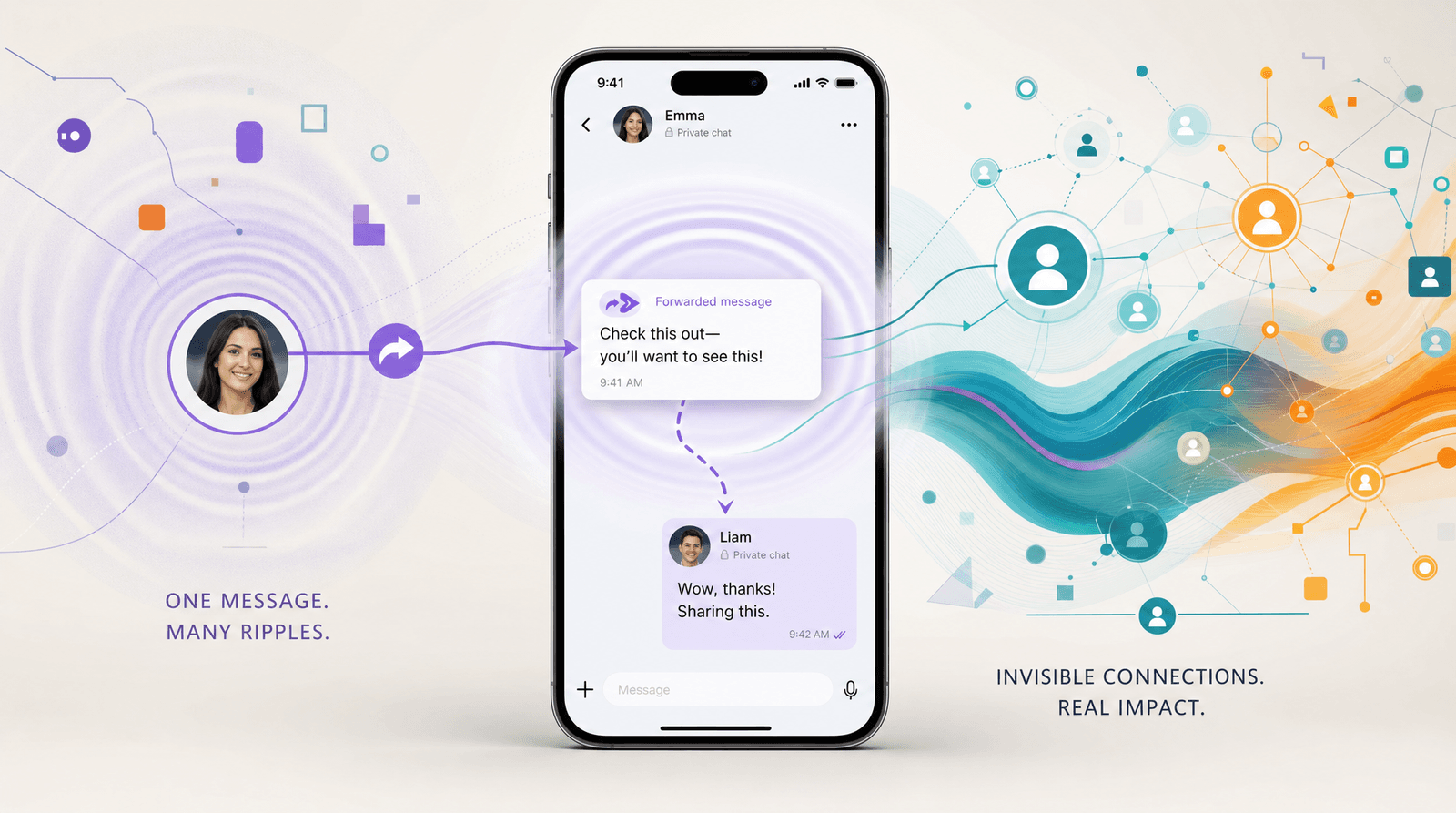
Someone is talking about you right now in a group chat you'll never see.
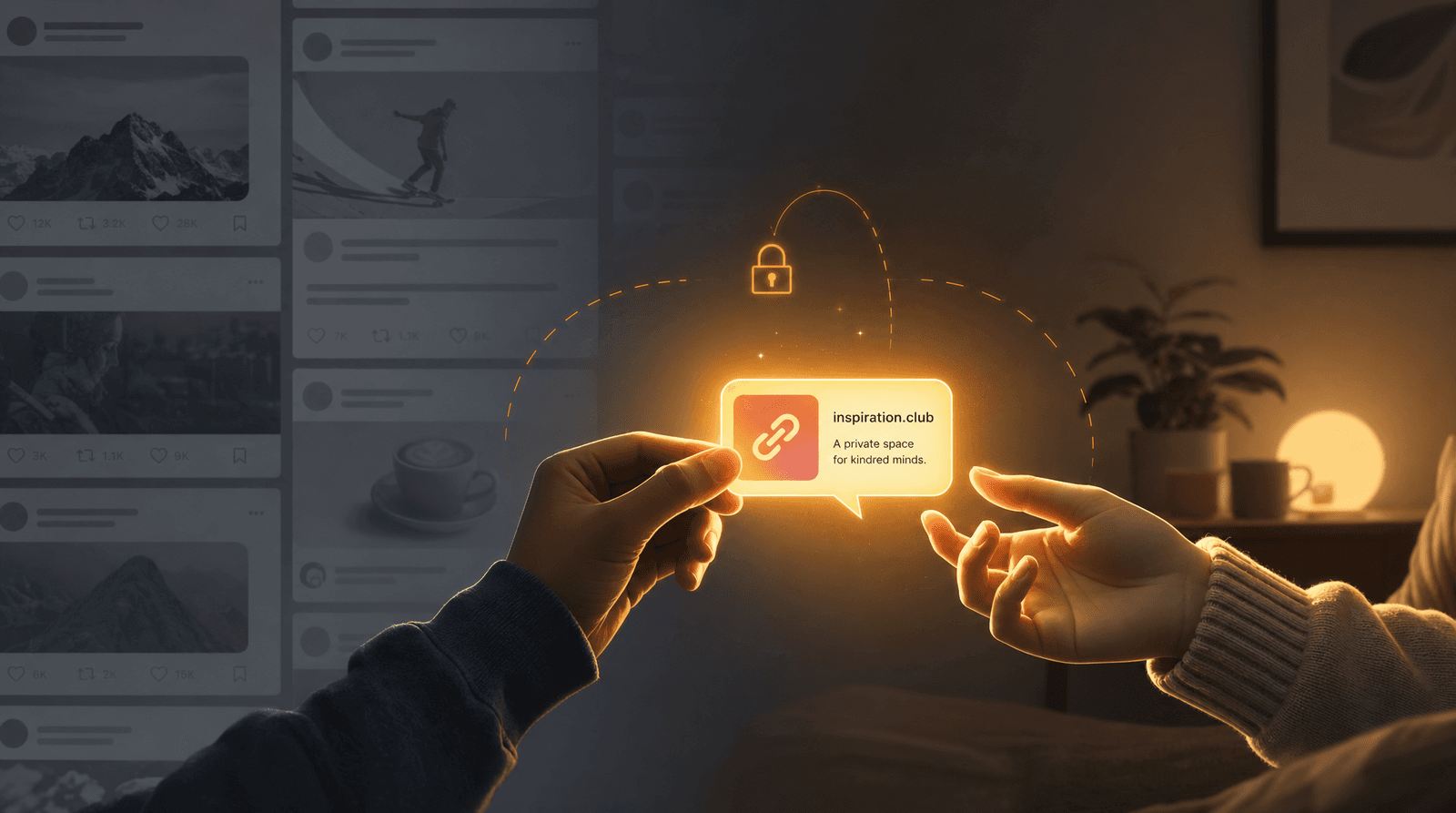
They're screenshotting your post, copying your link, and texting it to a friend with a note that says "this is exactly what you need." No public tag. No share button pressed. No analytics ping. Just one person telling another person that you're worth paying attention to.
This is the most powerful form of marketing that exists. And your dashboard has absolutely no idea it's happening.
The Rise of Dark Social
The term "dark social" refers to traffic that arrives through private, untraceable channels: direct messages, text threads, WhatsApp groups, Slack channels, email forwards, and anywhere else people share links without a public referrer. When someone pastes your URL into an iMessage, your analytics tool sees a visitor arrive with no source. It shows up as "direct traffic" or simply vanishes into the void.
Here's what makes this uncomfortable: by most estimates, dark social accounts for the majority of all online sharing. The public share (the retweet, the story reshare, the comment tag) is the exception, not the rule. Most people share things the same way they recommend restaurants: quietly, one-on-one, to someone specific.
And the gap is widening. As platforms become noisier and more algorithmically chaotic, people are retreating into private spaces. Group chats are the new feeds. DMs are the new discovery engines. The public square is for performance; the private channel is for genuine recommendations.
Why Your Analytics Are Lying to You
If you've ever looked at your traffic sources and felt underwhelmed by social, you're not seeing the full picture. You're seeing the tip of a very large iceberg.
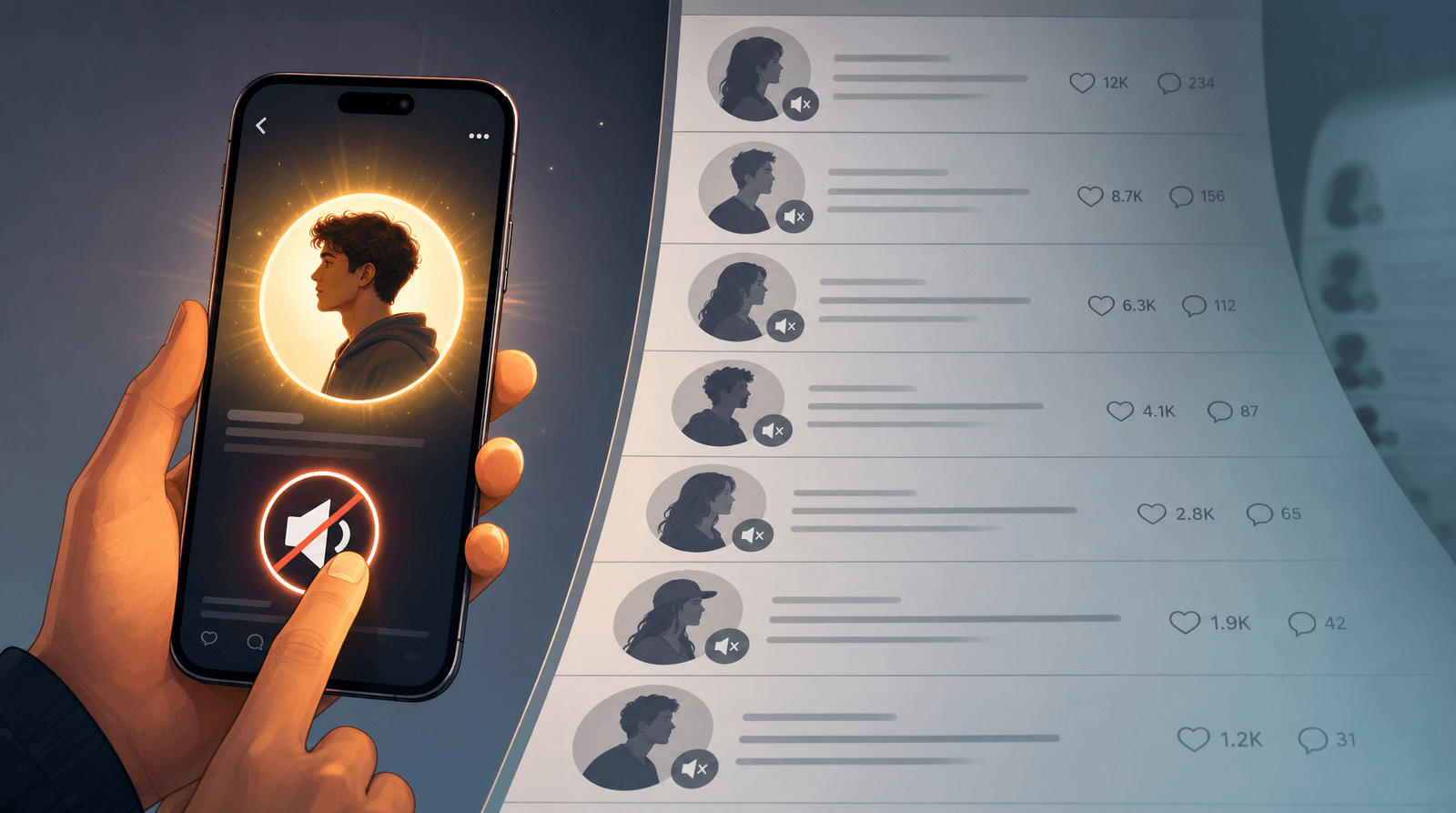
Consider what actually happens when someone discovers you on Instagram. They see your Reel, tap your profile, and maybe visit your link in bio. That's trackable. But the more common (and more valuable) path looks like this: they see your content, screenshot it, send it to a friend in DMs with context about why it matters, and that friend visits your link three days later from their browser with no referrer attached.
That second scenario carries infinitely more trust. It came with a personal endorsement. But in your analytics, it looks like nothing. Or worse, it looks like "direct" traffic that you attribute to people typing your URL from memory.
This means most creators and small businesses are systematically undervaluing their best-performing content. The post that "flopped" with 200 likes might have been screenshotted and shared privately 50 times. The blog post with modest pageviews might be circulating in industry Slack channels. You'd never know.
Dark Social Is a Trust Signal
Here's the part that matters for your strategy: dark social sharing is the highest-trust form of recommendation that exists online.
When someone shares your link publicly, they're performing. They're signaling taste, building their own brand, curating their feed. There's social capital at play. But when someone shares your link privately, in a text to one person? That's pure signal. They gain nothing from it except the satisfaction of helping someone they care about.
This is why dark social traffic converts at dramatically higher rates than public social traffic. The person arriving at your Liinks page from a friend's text message is pre-sold. They already trust you because someone they trust vouched for you.
Think about your own behavior. When a friend texts you a link and says "you should check this out," you check it out. When an algorithm surfaces the same link in your feed, you scroll past it. The medium is the message, and the medium of dark social is personal trust.
What This Means for Your Link-in-Bio Strategy
If the majority of your real sharing happens in private channels, then your link-in-bio page isn't just a public-facing landing page. It's the thing that gets forwarded. It's the URL that gets pasted into group chats. It's the single artifact that represents you in conversations you'll never see.
This changes how you should think about your page design:
Make your URL memorable and clean. When someone is describing you in a text message, they might type your link from memory. A short, recognizable URL (your name or brand on Liinks) is easier to share in a quick message than a long, complex one.
Design for context-free arrivals. Someone landing on your page from a friend's DM has no prior context about you. They didn't just watch your Reel or read your tweet. Your page needs to communicate who you are and what you offer in seconds, without assuming the visitor saw any specific piece of content first.
Front-load your highest-converting links. The dark social visitor is already warm (their friend sent them), but they're also impatient (they're checking a link mid-conversation). Put your most important offer, your core value proposition, at the top. Don't make them scroll through six social media links to find the thing their friend actually sent them for.
Update your page regularly. If your page gets shared in a group chat today but the recipient doesn't click until next week, stale content kills the momentum. Keep your Liinks page current so that whenever someone arrives, no matter when, they find something relevant.
How to Design Content That Gets Shared Privately
You can't force dark social sharing. But you can create the conditions for it. Certain types of content are dramatically more likely to be forwarded privately than shared publicly:
Highly specific, niche-relevant content. Broad content gets public likes. Specific content gets private forwards. "10 Social Media Tips" gets a like. "The exact email template I use to pitch podcast hosts" gets texted to a friend who's about to pitch their first podcast.
Content that makes someone think of someone else. The trigger for private sharing is almost always "oh, [name] needs to see this." Create content targeted enough that it makes your audience think of a specific person in their life.
Genuinely useful tools and resources. Free tools, templates, and calculators spread like wildfire in private channels. When you offer something like a link-in-bio page builder or a resource that solves a specific problem, people share it directly with the person who has that problem.
Contrarian takes that people agree with but won't say publicly. Your most-forwarded content is often the stuff people don't want to publicly endorse but privately agree with. The opinion piece that gets modest engagement might be your most-shared content in DMs. (This is closely related to why zero-click content works so well: the best content doesn't need a public reaction to spread.)
Stop Measuring What's Easy and Start Designing for What Matters
The hard truth about dark social is that you can't fully measure it. You can look at proxy signals: spikes in "direct" traffic after a strong post, UTM-tagged links that show up in unexpected places, anecdotal feedback from people who say "a friend sent me your link." But you'll never have a clean dashboard showing exactly how many private shares your content generated.
And that's fine. The obsession with measurability has made marketers optimize for the wrong things. We've built strategies around public engagement metrics because they're easy to count, while the actual mechanism that drives trust and conversions (one person privately recommending you to another) remains invisible and therefore ignored.
The creators who win in this environment are the ones who stop asking "how do I get more likes?" and start asking "how do I become the kind of resource that people text to their friends?" Those are two very different questions, and they lead to very different strategies.
The first question leads to chasing trends, optimizing hooks, and playing the algorithm game. The second leads to building genuine value, deepening relationships over audience size, and treating your existing audience as your most powerful distribution channel.
TL;DR
Dark social (private sharing via DMs, texts, and group chats) likely accounts for the majority of how your content actually spreads. Your analytics can't track it, which means you're probably undervaluing your best content and underestimating your real reach. The fix isn't to find better tracking. It's to design your content and your link-in-bio page for the reality that most people who find you will arrive through a private recommendation, with high trust but zero context. Make your Liinks page clean, current, and immediately compelling for someone who's never seen you before but already trusts the person who sent them.
Make Your Page Worth Forwarding
Your link-in-bio page is the destination that travels through every private share. When someone texts your link to a friend, that page is doing the talking on your behalf. Make sure it says the right things.
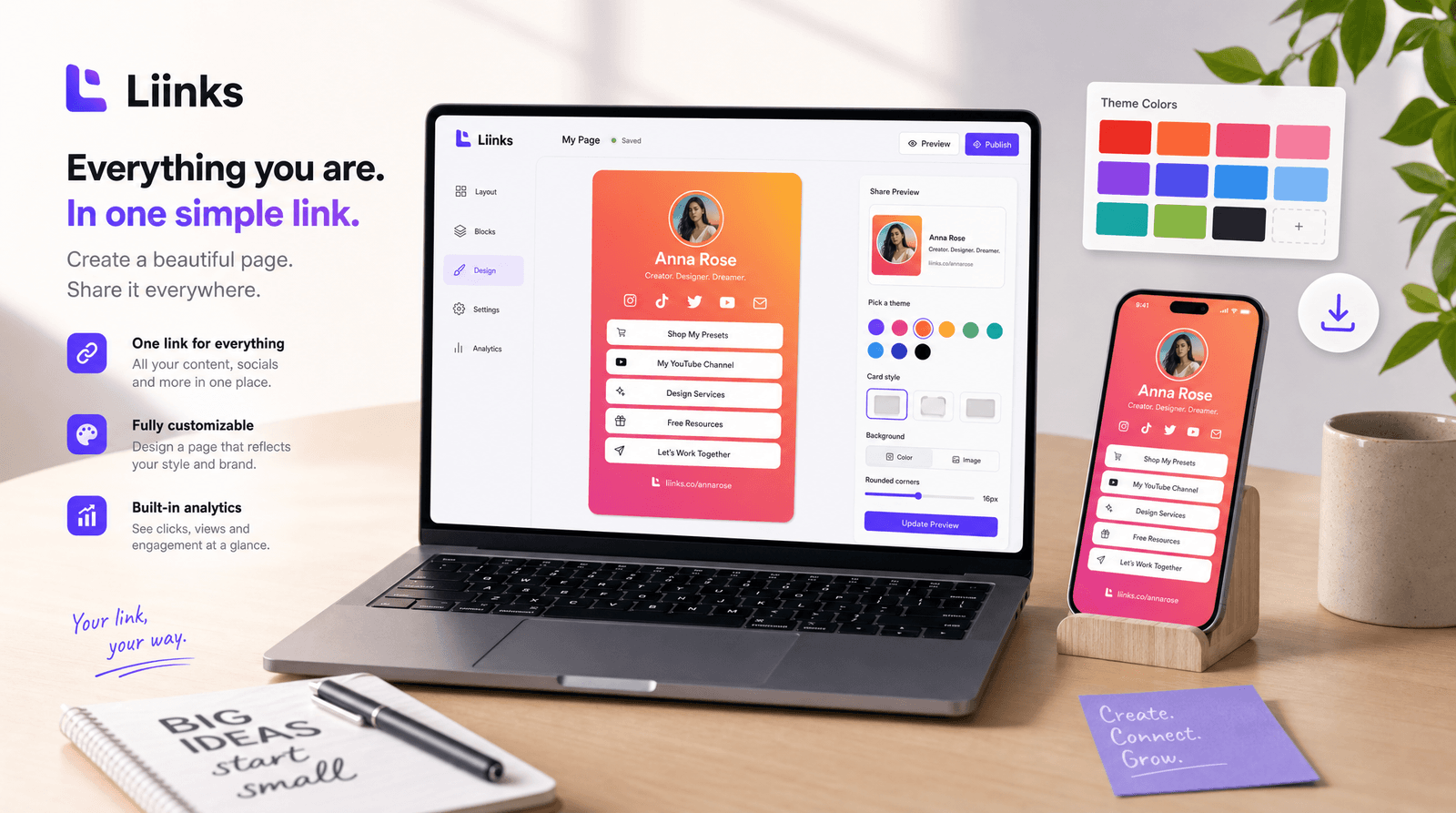
Liinks gives you a clean, fast, customizable page that looks professional whether someone arrives from your Instagram bio, a Google search, or a friend's group chat. Set up your page in minutes and give your invisible marketing the landing page it deserves.