Your Customers Are Your Best Marketers — And You're Probably Ignoring Them


Here's a number that should make you uncomfortable: the average creator spends 80% of their marketing energy trying to reach people who don't know they exist — and roughly 0% of that energy activating the people who already bought from them, followed them, or told a friend about them last month.
We're all guilty of it. The dopamine hit of a new follower, a viral reel, a spike in impressions — it's addictive. But it's also a trap. Because while you're out there hustling for cold attention, your warmest audience — the people who already trust you — are doing absolutely nothing on your behalf. Not because they don't want to help. Because you never asked.
The unsexy truth about sustainable growth is that it almost never comes from content going viral. It comes from one person telling another person, "You should check this out." And the businesses and creators who understand that — who build systems around it instead of praying for algorithmic miracles — are the ones quietly winning.
The Word-of-Mouth Gap
Let's start with what we know. Nielsen has been saying the same thing for over a decade: 92% of consumers trust recommendations from people they know over any other form of advertising. Not influencer endorsements. Not paid placements. Actual humans they have dinner with.
And yet. If you look at how most creators and small businesses allocate their time, word-of-mouth isn't even on the list. There's a content calendar. There's an ad budget. There's an SEO strategy. There might even be an influencer outreach spreadsheet. But "make it easy for happy customers to spread the word"? That's filed under "it'll happen naturally."
It won't. Or rather — it will, but at a fraction of what's possible if you're intentional about it.
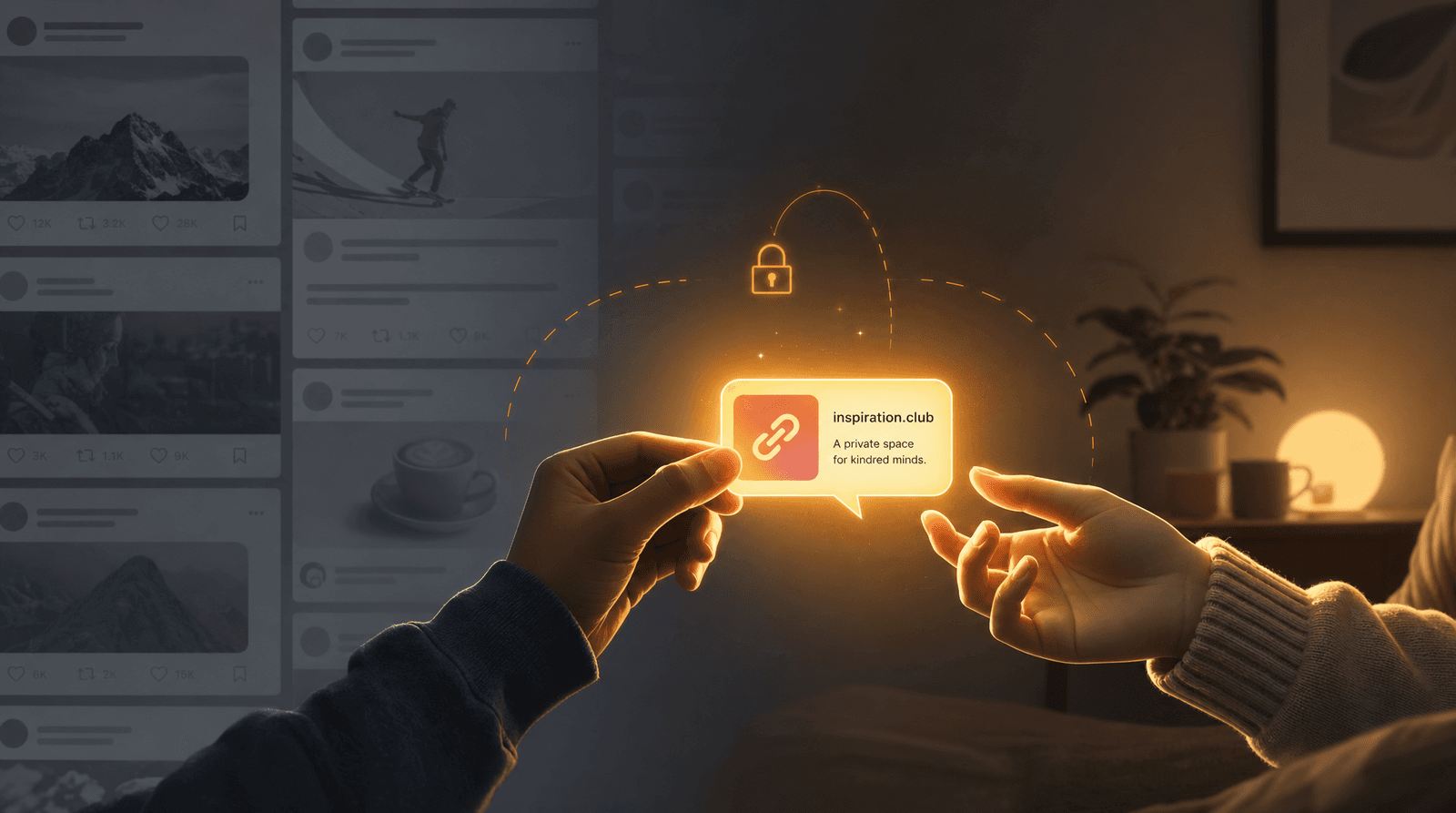
Think about the last time you recommended a product or service to someone. What did you actually do? You probably texted a link, or said "just google them," or — if the person was lucky — you pulled up the brand's page on your phone and showed them. The friction in that process is where word-of-mouth dies. Every extra step between "I love this" and "here, look" is a leak in the funnel.
Why Your Link-in-Bio Is a Word-of-Mouth Engine (You Just Haven't Turned It On)
This is where most people miss the connection. Your link-in-bio page isn't just a hub for your audience to click through — it's the single most shareable summary of who you are and what you offer.
When a customer wants to recommend you, they need something to share. Not your Instagram grid (too much scrolling). Not your website (too many pages). Not your latest post (too specific). They need a clean, scannable page that says: "This is who they are, this is what they do, and here's how to get started."
That's literally what a link-in-bio page is.
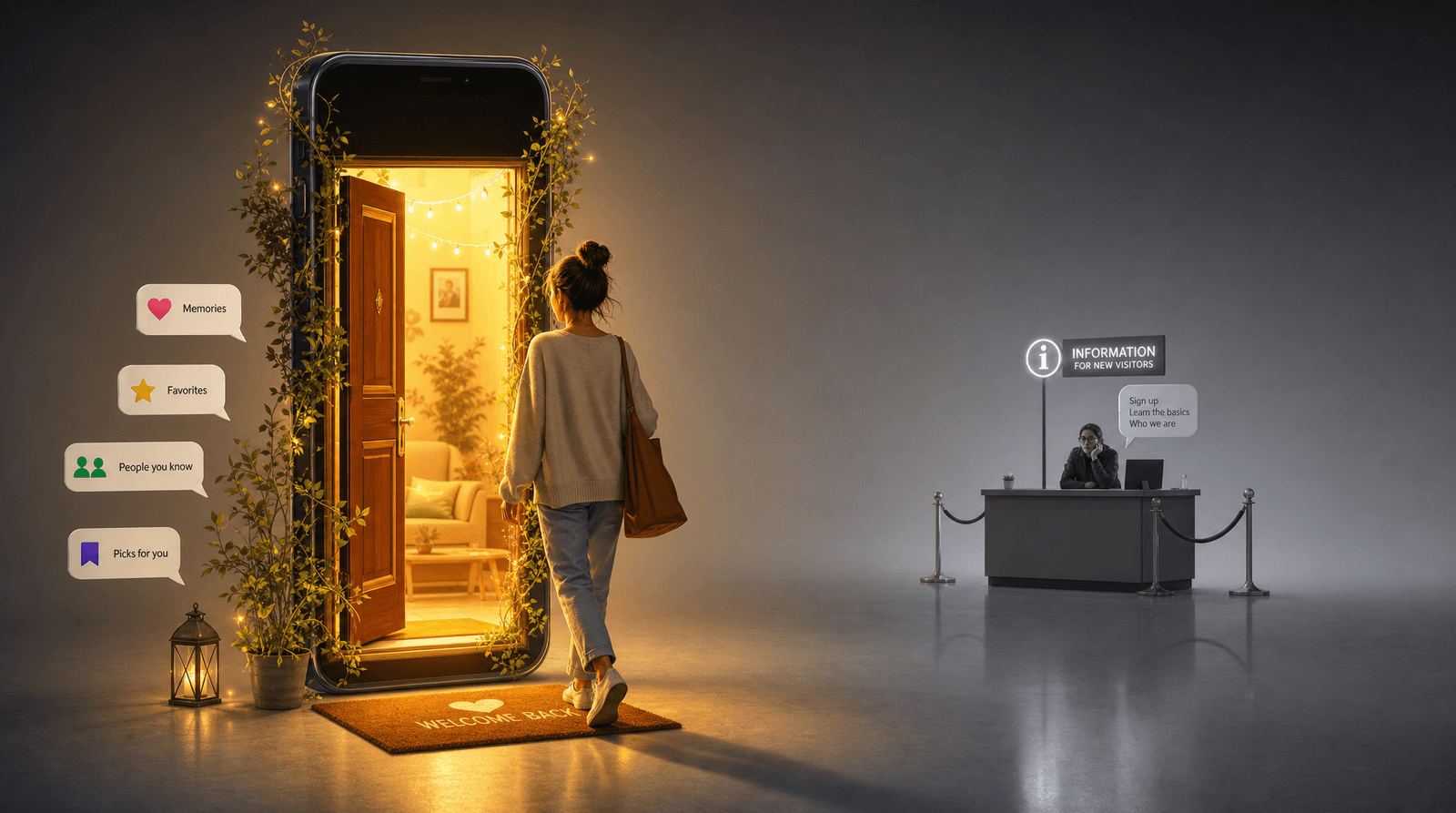
But here's the thing — most people design their Liinks page for their own audience, not for the audience of their audience. The distinction matters. Your followers already know your story. They know what "The Blueprint" refers to, they know which product is which, they know the shorthand. The person your customer is recommending you to? They know nothing. They're seeing your page for the first time, cold, with zero context.
If your page doesn't make sense to a stranger in five seconds, you've broken the promise that your customer made when they said "you should check this out."
Three Things Your Happiest Customers Need From You
Stop thinking of customer advocacy as a "nice to have." Start thinking of it as a channel — one that requires the same intentionality as your content strategy. Here's what that looks like in practice.
1. Give Them Something Worth Sharing
This sounds obvious, but most creators make it surprisingly hard. Your customer just had a great experience. They're feeling good. They want to tell someone. What do they share?
If the answer is "I guess they could screenshot my page and DM it to someone," you've already lost. Screenshots are dead ends — no clickable links, no context, no conversion path.
Instead, make your page the thing people share. A well-structured Liinks page with clear sections, a strong header, and obvious CTAs is infinitely more shareable than any single piece of content you'll ever create. It's your storefront, your elevator pitch, and your business card — all in one link. One link that fits in a text message, a group chat, a Slack thread, or a reply to "does anyone know someone who does X?"
2. Make the Ask (Without Being Weird About It)
The number-one reason customers don't advocate for you is that it never occurs to them. Not because they don't like you — because the thought simply doesn't cross their mind in the moment.
You have to create that moment.
This doesn't mean adding a "REFER A FRIEND" popup. It means small, natural nudges at the right time:
- After a purchase confirmation: "Know someone who'd love this? Share your page link."
- In a follow-up email: "If you found this helpful, I'd love it if you shared it with someone who's in the same boat."
- On your page itself: a button that says "Share this page" or "Send to a friend" — low friction, high intent.
The key word here is natural. Nobody wants to feel like they're being recruited into a referral scheme. But most people are genuinely happy to share something they love — they just need a gentle prompt and a frictionless way to do it.
3. Reward the Behavior (Even If It's Just Recognition)
You don't need a formal referral program with tracking codes and commission structures (though those work too). Sometimes the most powerful reward is simply acknowledgment.
Feature a customer's story on your page. Shout them out in a story. Send a DM that says "hey, I saw you recommended me to [person] — that means a lot, thank you." These tiny gestures create a loop: the customer feels seen, they advocate more, their friends convert, those new customers eventually advocate too.
This is how small audiences become powerful. It's not about reach. It's about depth.
The Math That Should Change Your Strategy
Let's run some napkin numbers.
Say you have 500 customers (or clients, or students, or subscribers — whatever your version of "customer" is). If 10% of them recommend you to one person this month, that's 50 new warm leads. Not cold traffic from an ad. Not algorithmic impressions from a reel that took four hours to edit. Warm, trust-backed introductions from people who already put their money where their mouth is.
Now compare that to what you'd need to spend on paid acquisition to get 50 warm leads. For most small businesses, we're talking hundreds — sometimes thousands — of dollars. And paid leads convert at a fraction of the rate that referred leads do, because referred leads arrive pre-loaded with trust.
This is the math that makes customer advocacy so powerful and so criminally underutilized. It's not scalable in the way that ads are scalable, but it's compounding in a way that ads never will be. Every advocate you activate becomes a permanent channel. They don't stop recommending you when your ad budget runs out.
Building a Shareable Page (Not Just a Pretty One)
If you buy the premise that your customers are an untapped marketing channel, then your link-in-bio page needs to be designed with their audience in mind — not just yours.
Here's a quick audit:
-
Does your page make sense to a total stranger? Remove insider language, unexplained acronyms, and inside jokes. The person arriving via a friend's recommendation has zero context. Your page has five seconds to communicate what you do and why it matters.
-
Is your most important offering above the fold? When someone's friend says "check out this person's page," the visitor will look at the top, scan for about three seconds, and either engage or bounce. Put your strongest CTA at the top.
-
Can your page be shared in one tap? This is table stakes. If sharing your page requires copying a URL, navigating to a different app, and pasting — you're adding friction. Tools like Liinks make this effortless because the share mechanic is baked into the format: it's one link, always.
-
Does your page tell a story or just list links? A page that's just a wall of buttons gives a stranger nothing to hold onto. Use sections, headers, and visual hierarchy to guide the visitor through a narrative: who you are → what you offer → how to take the next step.
Your page isn't just a directory. It's a pitch deck that your customers deliver on your behalf. Make it worth delivering.
The Advocacy Flywheel
The real magic happens when customer advocacy stops being a tactic and becomes a system. Here's what the flywheel looks like:
-
Deliver something worth talking about. This is step zero. If your product or service isn't generating genuine enthusiasm, no amount of referral engineering will help.
-
Make sharing frictionless. One link. One tap. Done. Your link-in-bio page is the vehicle.
-
Create natural ask moments. Post-purchase, post-milestone, post-positive-feedback — these are your windows. Use them.
-
Recognize advocates. Publicly or privately, make them feel seen. This turns one-time sharers into repeat advocates.
-
Convert the referral. When a new person lands on your page, make sure it answers their first question instantly: "What is this, and why should I care?"
-
Turn the new customer into the next advocate. And the wheel spins again.
Every revolution of this flywheel is cheaper than an ad, warmer than a cold DM, and more durable than a trending reel. It compounds quietly in the background while you sleep.
TL;DR
- Your existing customers are your most powerful — and most ignored — marketing channel.
- Word-of-mouth still drives more trust-backed conversions than any paid channel, but it doesn't "just happen" — you have to design for it.
- Your link-in-bio page is the perfect vehicle for customer advocacy: it's one link, it's shareable, and it tells your whole story in seconds.
- Design your page for strangers, not just fans. The person your customer sends to your page has zero context — make sure they get hooked anyway.
- Activate advocacy through natural ask moments, frictionless sharing, and simple recognition — not elaborate referral programs.
Make Your Page Worth Sharing
Your next customer is probably going to find you because someone who already loves you decided to spread the word. The question is whether you've made that easy — or whether you're leaving it to chance.
Start with your Liinks page. Audit it through the eyes of a stranger. Make it tell your story in five seconds. Then give your happiest customers a reason — and a way — to share it.
The best marketing doesn't feel like marketing. It feels like a friend saying, "You have to check this out." Build a page that's worth that sentence, and your customers will handle the rest.