The Micro-Influencer Proof of Concept: Use Liinks to Prove Your Value to Brands Before You Pitch

You don’t need 100k followers to land brand deals.
You need proof.
Proof that:
- Your audience actually listens to you
- You can move people from “scrolling” to “clicking”
- A brand won’t be wiring money into a black hole
That’s where a proof-of-concept system comes in—and your link in bio is secretly the easiest place to build it.
In this guide, we’ll walk through how to use Liinks as your micro-influencer lab so you can:
- Run tiny, low-stress experiments with products and offers
- Collect real numbers brands care about (CTR, conversions, saves, signups)
- Turn your bio link into a live portfolio that does half your pitching for you
If you’ve ever thought, “I’m too small for brands to care,” this is your framework for proving yourself wrong.
Why Micro-Influencers Have the Upper Hand (If You Can Prove It)
Let’s get your confidence up before we get your click-through rate up.
Recent data shows:
- Micro-influencers (typically 10k–100k followers) consistently outperform macros on engagement, often delivering 2–3x higher engagement rates and better conversion ROI.
- Many brands now prefer working with nano and micro creators over big names because they’re more niche, more trusted, and more cost-effective.
Translation: brands already believe creators your size can drive results.
What they don’t believe—yet—is you specifically.
Your job is to make it painfully easy for a brand manager to see:
“Oh, this person can clearly drive traffic and action. We’re not guessing—we’re looking at it.”
That’s the power of a proof-of-concept built around your link in bio.
What “Proof of Concept” Actually Means for a Creator
When brands say they want “proof,” they’re not asking for:
- A perfectly curated media kit
- A 20-page pitch deck
- A follower count that gives you imposter syndrome
They’re looking for behavioral evidence:
- Do people click when you tell them to click?
- Do they sign up, download, or buy when you recommend something?
- Can you guide people to the right next step instead of dumping them on a random homepage?
You can demonstrate all of that with:
- A focused, on-brand Liinks page
- A few simple experiments
- Screenshots and stats that go straight into your pitches
Think of your Liinks page as your living case study. Your content sends people there; your layout and links show what happens next.
Step 1: Turn Your Liinks Page into a Brand-Ready Hub
Before you run experiments, your hub needs to look like somewhere a brand would trust.
Here’s the checklist.
1. Clarify Your Role in One Line
When a brand clicks your bio link, they should understand you instantly.
Add a short, clear headline at the top of your Liinks page, like:
- “Skincare-obsessed esthetician helping sensitive skin go from chaos to calm.”
- “Budget travel creator showing you how to see the world on a long-weekend budget.”
- “BookTok reviewer specializing in romantasy and morally gray disasters.”
This line sets the context for your future brand deals. It tells them what lane you’re in.
2. Group Links by Intent (Not by Chaos)
If your current setup is “everything I’ve ever done in one long list,” your proof-of-concept data will be muddy.
Borrow some ideas from Stop Guessing, Start Grouping: How to Use Content Buckets to Organize Your Liinks Page (So People Actually Find Stuff) and create 3–5 clear sections like:
- Start Here – your main CTA (newsletter, primary offer, or hero link)
- Shop My Recommendations – affiliate links, storefronts, discount codes
- Free Value – lead magnets, guides, playlists, templates
- Work With Me – UGC services, sponsorship inquiries, media kit
Brands love structure. It screams, “I think about user journeys,” which is exactly what they’re buying.
3. Make It Pretty and Legible
You’re a micro-influencer, not a 2010 coupon site.
On Liinks, dial in:
- Consistent colors that match your content (no rainbow chaos unless rainbow is the brand)
- Readable fonts—cute is fine, illegible is not
- Clear button labels, e.g.:
- “Shop My Everyday Makeup” (not “SHOP!!”)
- “Free 7-Day Meal Plan” (not “Click here”)
- “Brand Collabs & UGC Portfolio” (not “Email me”)
If you want a deeper dive into how design choices can quietly boost both trust and searchability, bookmark Aesthetic Meets Algorithm: How Design Choices on Your Liinks Page Quietly Boost SEO for later.
Step 2: Design Micro Experiments Brands Actually Care About
Now for the fun part: turning your Liinks page into a tiny R&D lab.
Instead of waiting for brands to give you a brief, you’re going to run your own campaigns and measure the results.
Choose One Clear Outcome to Test
Pick one of these to focus on first:
- Click-through power – “Can I get people from TikTok/IG to a specific product link?”
- Email list growth – “Can I drive signups to a freebie or newsletter?”
- Purchase intent – “Will people click through to a low-ticket product or affiliate offer?”
Each outcome becomes a mini case study you can later drop into your pitch emails.
Example Experiments You Can Run This Week
-
“Shop My Routine” Click Test
For beauty, skincare, fitness, or fashion creators.- Create a section on Liinks called “Shop My Daily Routine”
- Add 3–5 products you already use, via affiliate links or storefronts
- Post 3–5 short videos over a week walking through your routine and pointing viewers to “Shop my routine via the link in my bio”
- Track which product links get the most clicks
This gives you concrete data like: “In one week, my ‘AM skincare routine’ content drove 214 clicks to a single cleanser link.”
-
Lead Magnet Proof-of-Concept
For educators, coaches, or niche experts.- Create a simple freebie (Notion template, PDF checklist, mini guide)
- Put it front and center on your Liinks page: “Free Guide: 7 Budget-Friendly Dinners Under $10”
- Promote it in your content with a clear CTA
- Track how many signups you get over 7–14 days
Now you can say: “My audience isn’t just scrolling—they opted in at a X% click-to-signup rate for a free resource.”
-
Offer or Product Soft Test
If you’re flirting with selling something of your own.This pairs beautifully with the approach in From ‘Link in Bio’ to Launchpad: Using Liinks to Soft-Test New Offers Before You Build the Whole Funnel.
- Create a simple interest-check page or waitlist form
- Add a prominent button on Liinks: “Join the Waitlist: Skin Barrier Bootcamp”
- Mention it casually in content for 1–2 weeks
- Measure clicks and signups to prove demand
Brands love creators who can prove they can sell their own ideas, not just read a script.
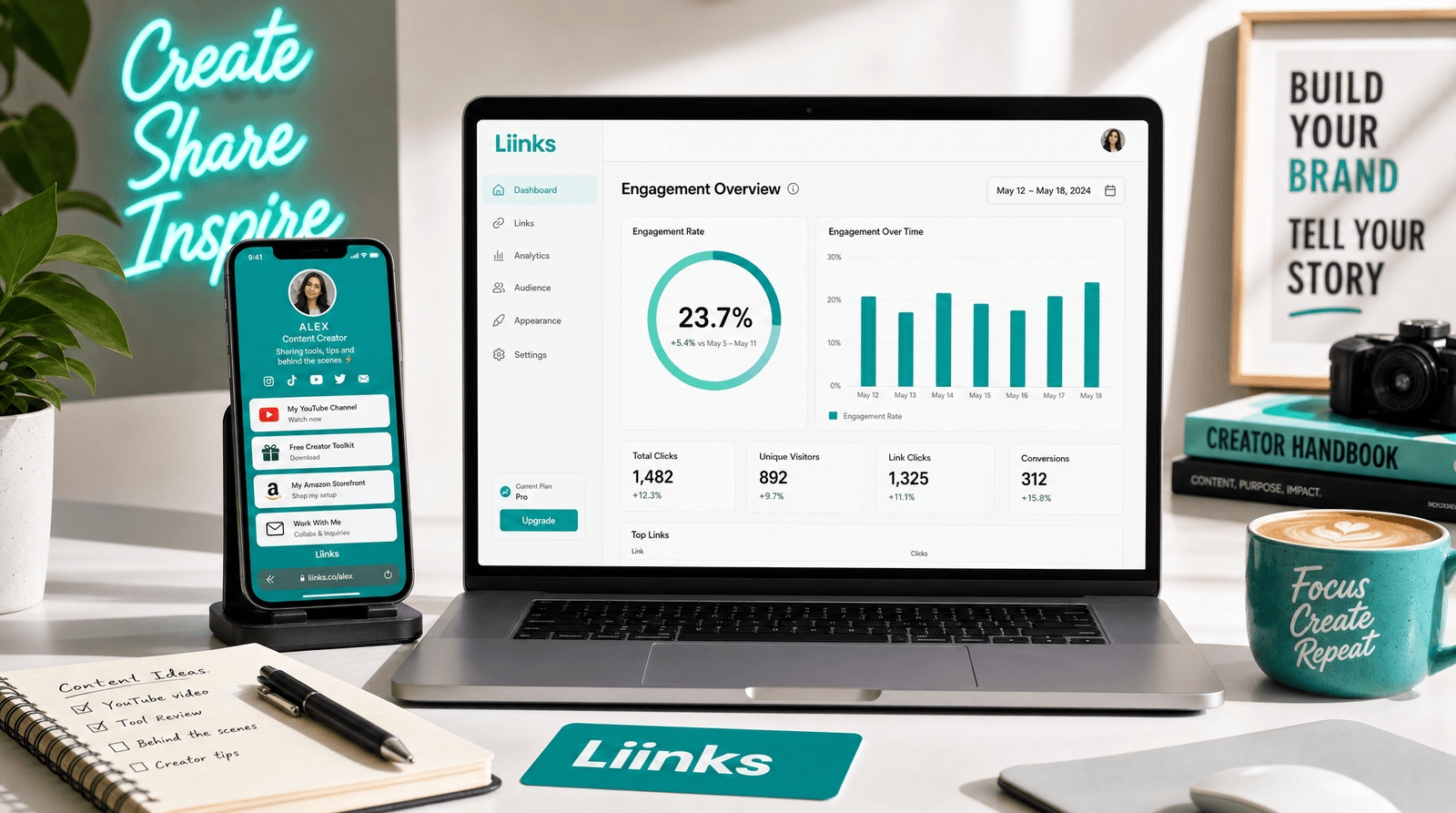
Step 3: Set Up Liinks So the Data Is Easy to Screenshot
Remember: your future brand contact is busy and slightly allergic to guesswork.
You want stats that are:
- Simple to understand
- Easy to screenshot
- Directly connected to specific content and links
Here’s how to make that happen.
1. Make Each Key Link Extremely Specific
Instead of one vague link like “My Faves,” use multiple, tightly framed links, for example:
- “Vitamin C Serum I Use Every Morning”
- “$40 Noise-Cancelling Headphones I Recommend to Students”
- “Free Weekly Meal Plan Template”
Specific labels make your analytics more meaningful. If a brand sees high clicks on “Vitamin C Serum I Use Every Morning,” they instantly understand the context.
2. Limit Your “Hero” Links
Your proof-of-concept experiments should have one main hero link at a time.
For a two-week window, that might be:
- A single featured product
- One lead magnet
- A waitlist or launch
Pin it visually at the top of your Liinks page with a standout color or larger button. This concentrates your traffic so the data is clean.
3. Track Performance Over a Clear Time Window
Pick a timeframe and stick to it, for example:
- 7 days for quick content bursts
- 14–21 days for a more realistic micro-campaign
During that window:
- Post content that points to that specific link
- Note how many posts you made
- Record the total clicks that link received in that period
You’re building your own mini “campaign report.”
Step 4: Turn Your Numbers into Brand-Friendly Stories
Raw numbers are good. Numbers with context are irresistible.
When you’re ready to pitch, you’re not just saying, “My link gets clicks.” You’re saying:
“When I run a focused mini-campaign, here’s exactly what happens.”
What to Track (and How to Talk About It)
You don’t need a PhD in analytics. Focus on:
- Clicks per campaign – “This link received 327 clicks in 10 days.”
- Top-performing link types – “Routine-based product bundles outperform one-off product links by 40%.”
- Content → Click connection – “Three reels mentioning my ‘Shop My Routine’ link drove 80% of all clicks that week.”
When you put this in a pitch or media kit, frame it like mini case studies:
Mini-Campaign: Winter Skincare Routine (Self-Initiated)
• Timeframe: 10 days
• Content: 4 reels + 3 stories
• Hero Link: ‘Shop My Winter Skincare Routine’ on Liinks
• Results: 412 link clicks, 58% to a single moisturizer, with multiple DMs asking for shade/skin-type recommendations.
That reads like a brand brief you’ve already executed—because it is.
Bonus: Use Screenshots as Social Proof
Whenever you wrap a mini experiment:
- Screenshot your Liinks analytics for that key link
- Blur any sensitive info if needed
- Drop it into:
- Your media kit
- A “Results” highlight on Instagram
- A carousel titled “What Happens When I Recommend Something”
Suddenly your pitch isn’t “I think I can help your brand.” It’s “Here’s what I already do for products I love.”
If you want to get even more nerdy (in a good way) about analytics and design, you’ll like The Aesthetic Data Nerd: Using Analytics to Design a Better-Looking (and Better-Performing) Liinks Page.
Step 5: Package Your Proof Before You Ever Send a Pitch
Now that your proof-of-concept machine is running, let’s make it pitch-ready.
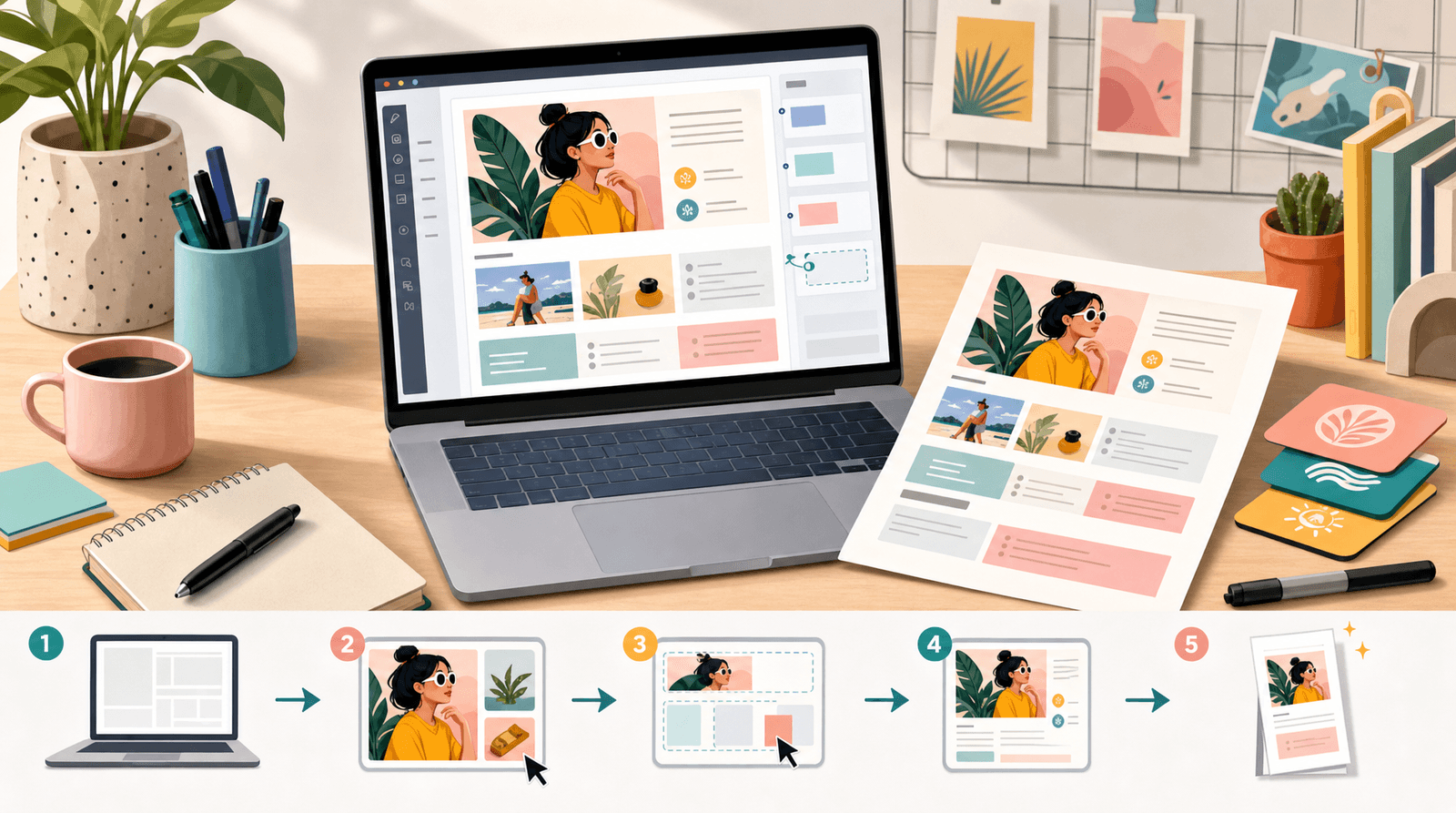
Build a Micro-Influencer “One-Pager”
This can live as:
- A PDF you attach
- A hidden page linked from your Liinks hub
- A Notion/Canva doc you share on request
Include:
-
Who You Are (1–2 sentences)
Your niche, audience, and what you’re known for. -
Audience Snapshot
- Platform(s)
- Follower ranges
- Key demographics (age, location, interests) if you have them
-
Proof-of-Concept Highlights
2–3 mini case studies from your Liinks experiments, formatted like:- “Routine-based product hub: 412 clicks in 10 days, 58% to hero product.”
- “Free guide: 236 email signups in 14 days from organic content only.”
-
How You’d Work With This Brand
Use your proof to suggest logical ideas:- “We could build a dedicated ‘[Brand] Routine’ section on my Liinks page and run a two-week content series pointing directly to it.”
- “We can test two angles (budget vs. premium) in separate Liinks sections to see what resonates more with my audience.”
Use Your Liinks Page as a Live Portfolio
When you send a pitch email, don’t just drop your IG handle. Include:
- A direct link to your Liinks page
- A short line like:
“You can see how I currently structure recommendations and offers here—this is the same hub I’d use to feature your products.”
A brand clicking through should immediately see:
- A clean, on-brand page
- Clear sections for shopping, learning, and working with you
- Evidence that you already treat your bio link like a tiny, well-run funnel
You’re not just another creator with “link in bio” vibes. You’re a micro-operator with systems.
Quick Recap: Your Micro-Influencer Proof-of-Concept Game Plan
Let’s zoom out.
You’re going to:
- Polish your Liinks hub so it looks brand-ready and clearly communicates who you are and what you do.
- Run small, focused experiments (routines, freebies, waitlists, product bundles) using specific links.
- Track key stats over short windows—clicks, signups, which link types win.
- Turn those results into mini case studies with simple, clear stories about what happens when you recommend something.
- Package everything into pitches and one-pagers so brands see proof, not promises.
Do this consistently for 1–2 months and you’ll have more concrete evidence than many creators with double your follower count.
Your Next Move (Yes, This Week)
You don’t need to overhaul your entire creator business to start.
Here’s a simple 7-day challenge:
-
Day 1–2: Refresh Your Liinks Page
- Add a clear headline
- Create 3–5 tidy sections
- Choose one hero link you want to test
-
Day 3–7: Run a Tiny Campaign
- Post 3–5 pieces of content pointing to that hero link
- Check your Liinks analytics at the end of the week
- Screenshot and save your results
By this time next week, you could have your first proof-of-concept ready to drop into a pitch.
If you’re ready to stop waiting for brands to “notice” you and start handing them undeniable proof, your link in bio is the best place to begin.
Set up or refresh your page with Liinks, pick one experiment, and start collecting the kind of receipts that make brand managers say, “When can we start?”