You're Not Being Googled Anymore. You're Being Asked About.

For about twenty years, getting found online meant one thing: ranking. You optimized for a search bar. Someone typed a few words, scanned ten blue links, and made a choice. Your job was to be one of those links, ideally near the top.
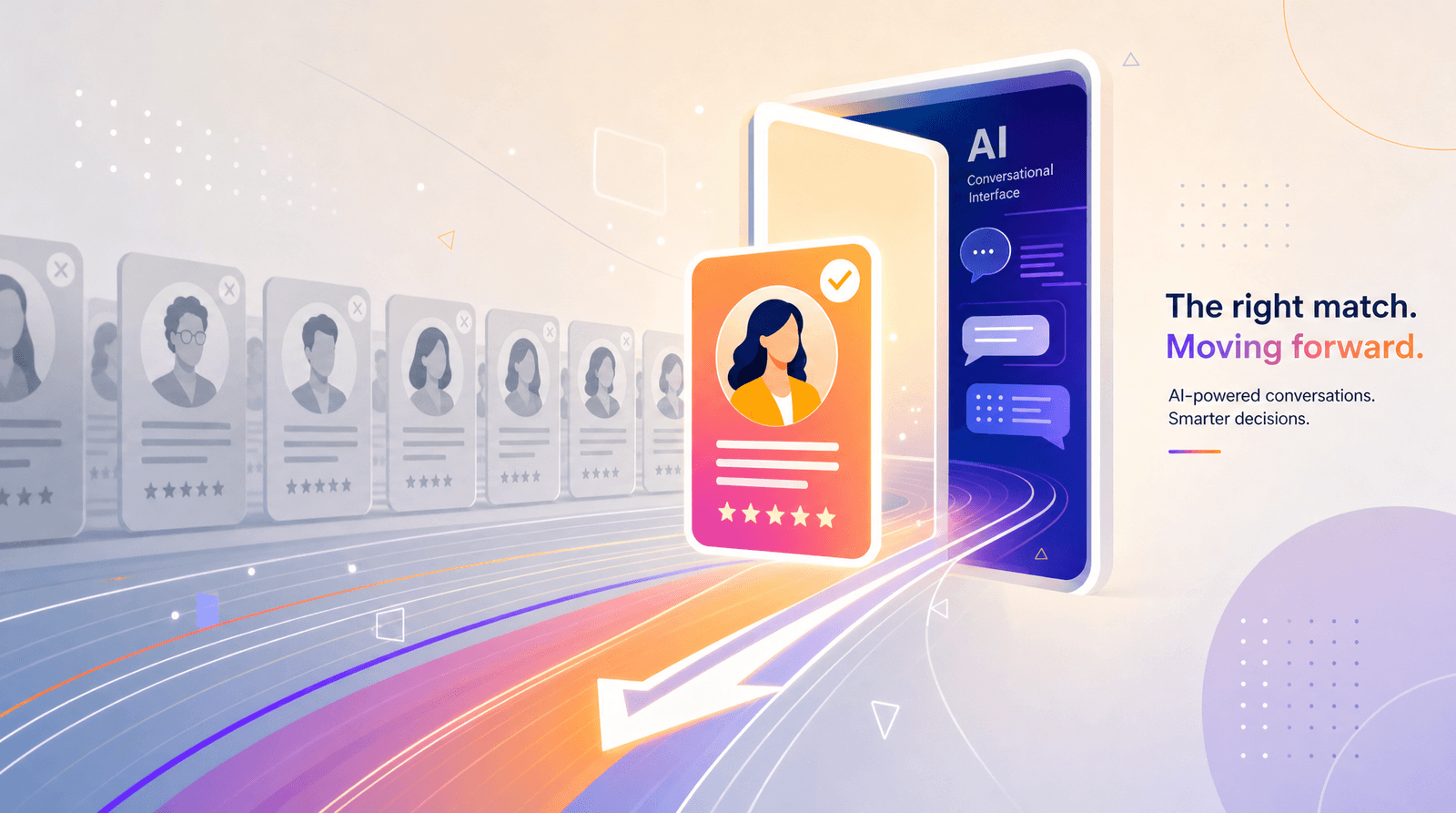
That whole ritual is quietly dying. Not because search is going away, but because the search bar is turning into a conversation. Your next customer is not typing "wedding photographer Portland" and comparing a page of results. They are asking ChatGPT "who's a good wedding photographer in Portland for a small outdoor ceremony," and the AI is handing back three names. Maybe with reasons. Maybe with a link. Often without one.
You are not being Googled anymore. You are being asked about. And the uncomfortable part is that you are not in the room when it happens.
The recommendation now happens before the click
Here is the shift in one sentence: discovery used to end with a click, and now it frequently ends with an answer.
When someone searched the old way, they did the filtering themselves. They read your headline, judged your reviews, formed an impression. Every step was a chance for you to make your case. The AI answer collapses all of that into a single response that the person reads in two seconds and mostly trusts. ChatGPT, Perplexity, Gemini, and Google's AI Overviews are all doing the same job now: they read the open web, weigh what they find, and produce a confident recommendation on your behalf.
This is not a far-off prediction. It is already how a huge share of "who should I hire," "what tool should I use," and "best X for Y" questions get answered. The person never sees a results page. They see a paragraph. And that paragraph either includes you or it doesn't.
So the question stops being "how do I rank" and becomes something stranger and more important: when an AI describes the best person for this job, does it describe you?
AI doesn't crawl one page. It triangulates your whole footprint.
The instinct, once you understand this, is to ask how to "optimize for ChatGPT" the way people optimized for Google. But these systems do not work off a single ranked page. They build a picture of you by pattern-matching across everything they can find: your social bios, your captions, the way other people describe you, a podcast you were on, a directory you're listed in, and yes, your link in bio.
That changes the game in two specific ways.
First, consistency starts to matter more than cleverness. If your Instagram bio says you're a "brand strategist," your LinkedIn says "marketing consultant," and your link in bio leads with "I help people tell better stories," an AI has three blurry signals and no clear answer to "what does this person actually do." It will round you down to something generic, or skip you entirely in favor of someone whose story is the same everywhere. The creators who get recommended are not the loudest. They are the most legible.
Second, corroboration beats self-promotion. You can call yourself the best in your city all day. What moves an AI is the same thing that moves a person: other sources saying it too. A mention in a roundup, a guest spot, a customer who wrote about you, a consistent specialty that shows up across platforms. This is why your quietest marketing, the stuff happening in DMs and shares and other people's posts, has suddenly become some of your most valuable. We wrote about that invisible layer in Your Best Marketing Is Happening Where You Can't See It, and answer engines are exactly the technology that turns it into recommendations.
Your link in bio just became a source, not just a destination
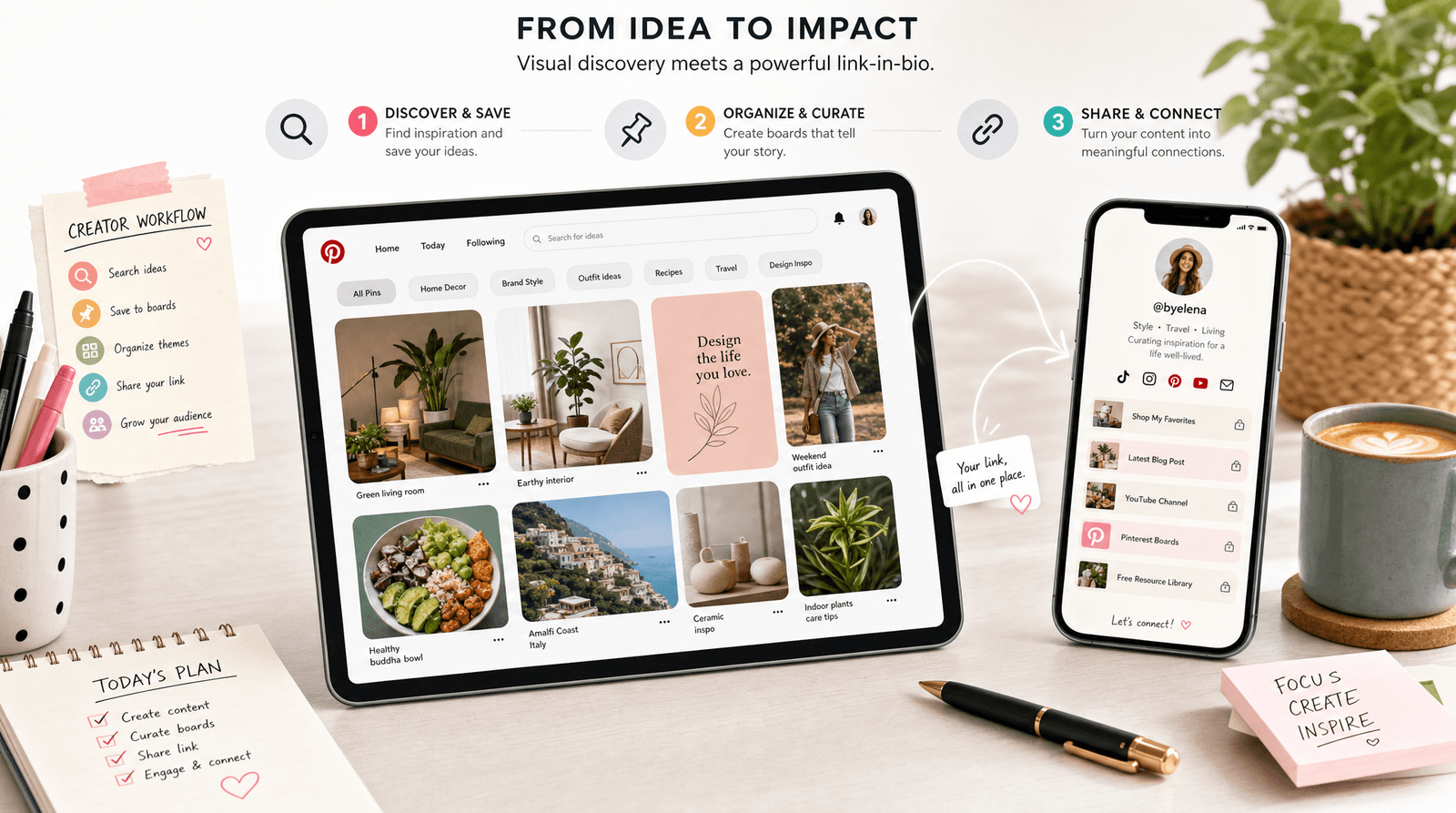
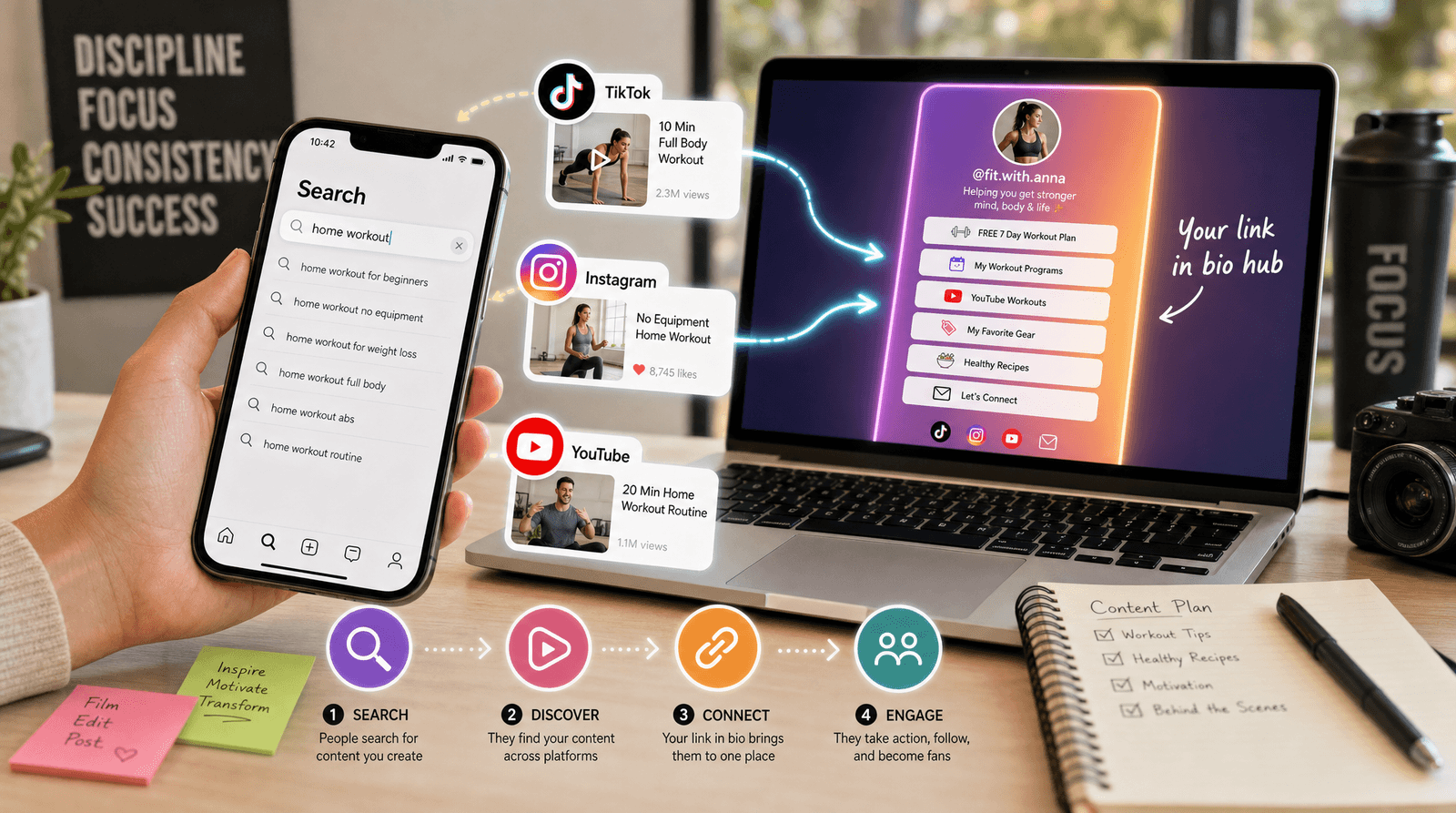
For years we have talked about the link in bio as a destination: the place clicks land. That framing is now half the story. In an answer-engine world, your link in bio is also a source: a clean, central page that both humans and machines read to figure out who you are and what you offer.
Think about what an AI needs in order to recommend you with confidence. It needs to know, plainly, what you do, who you do it for, where you operate, and how someone can act on it. Most people's online presence scatters that across a dozen places and buries it under aesthetics. A focused link in bio puts it in one readable spot.
This is where a tool like Liinks does quiet, structural work that has nothing to do with looking pretty. A clean Liinks page gives you a single canonical home that states your specialty in real text, organizes your offers into clear sections, and points to the same set of profiles every time. That is not just good for the visitor who eventually clicks. It is good for the system deciding whether to mention you at all. Plain, descriptive text beats a clever tagline that a machine can't parse. Real headings beat a wall of identical buttons.
We dug into the human side of this in How to Optimize Your Link-in-Bio for Social Search, back when "search" mostly meant people typing into TikTok and Instagram. The AI version raises the stakes: now the thing doing the searching can also do the recommending, and it rewards the same fundamentals. Be specific. Be consistent. Be easy to summarize.
What to actually do about it
You cannot reverse-engineer a black box, and anyone selling you a guaranteed "rank in ChatGPT" trick is guessing. But the durable moves are not mysterious, because they line up with how recommendations have always worked. Here is where to put your attention.
Say what you do in words, not just vibes
Lead your bio and your link in bio with a plain description of your specialty and who it's for. "Portland newborn photographer, in-home sessions" is legible. "Capturing fleeting moments" is not. If a human can't tell what you offer in three seconds, an AI can't either. Specificity is not limiting. It is the thing that makes you the answer to a specific question instead of a vague maybe.
Make your whole presence agree with itself
Pick one sentence that describes you and use a version of it everywhere: your social bios, your link in bio, your email signature, the way you introduce yourself on a podcast. You are not being repetitive. You are giving every system that reads you the same clear signal, so it stops rounding you down to generic.
Be mentioned, not just present
Recommendations run on corroboration. Get listed in the directories and roundups for your niche. Say yes to the guest spot. Make it easy for happy customers to talk about you by name. Every honest external mention is a vote that an answer engine can count. Your owned page tells the story; other people's mentions confirm it.
Give the machine something clean to read
This is the part people skip. Answer engines parse text, not screenshots. Write real descriptions on your links instead of leaving them as bare URLs. Use clear section headings. Add alt text to images. A page built as a tidy, readable structure is far easier to summarize than a beautiful image with no words a parser can grab. Your Liinks page can be both: good-looking for people and legible for machines.
Watch what actually drives action
You will not see the AI conversation that sent someone your way. What you can see is what happens after they land. This is where your analytics earn their keep: notice which links get clicked, which offers convert, and which traffic shows up without an obvious referrer. That last bucket, the people who just "found you," is increasingly the answer-engine crowd. If a particular page or offer is quietly pulling weight, lean into it.
The web is splitting into two readers
Step back and the bigger pattern is clear. Your online presence now has two audiences at all times. There is the human who eventually arrives, scrolls, and decides. And there is the machine that reads you first, forms an opinion, and decides whether the human ever arrives at all.
For a long time we optimized only for the human and assumed the machine was just a dumb index passing traffic through. That assumption is gone. The machine has opinions now. It summarizes. It recommends. It leaves people out. And it forms those opinions from the same scattered, half-finished, inconsistent presence most of us have been getting away with.
The good news is that fixing it for the machine fixes it for the human too. A page that clearly states what you do, agrees with the rest of your presence, and reads cleanly is a better experience for an actual person, not just a parser. This is the rare case where doing the boring, legible thing is also the smart, future-proof thing. If you want to go deeper on the durable side of discoverability, Link-in-Bio vs. Full Website: The SEO Tradeoffs No One's Talking About is a good companion read.
TL;DR
- Discovery is shifting from "type a query, scan results" to "ask an AI, get a recommendation." The recommendation now often happens before any click.
- Answer engines like ChatGPT, Perplexity, and Google's AI answers don't read one ranked page. They triangulate your whole footprint, so consistency and corroboration matter more than clever copy.
- Your link in bio is no longer just a destination. It is a source: a clean, readable home that both people and machines use to figure out what you do.
- The durable moves: say what you do in plain words, make your whole presence agree with itself, get mentioned by others, give machines clean text to read, and watch your analytics for traffic that arrives without a referrer.
- Optimizing for the machine and optimizing for the human are now the same job.
Make yourself easy to recommend
You can't sit in on the conversation where an AI decides who to suggest. But you can make sure that when your name comes up, the page behind it is clear, consistent, and easy to summarize.
That is exactly what a focused Liinks page gives you: one canonical home that states your specialty in real words, organizes your offers into clean sections, points to the same profiles everywhere, and shows you which links actually drive action. It is the difference between being a vague maybe and being the answer.
The next decade of getting found online belongs to the people who are easy to describe. Build a link in bio worth recommending with Liinks, and give every reader, human or machine, a clear reason to point at you.