SEO, But Make It Short-Form: How to Turn Reels, Shorts, and TikToks into Searchable Liinks Hubs

You’ve mastered the 9–15 second hook. You can point at text on screen like it’s your full-time job. People binge your Reels, Shorts, and TikToks.
And then… what?
They watch, they laugh, they maybe follow—and when they want to find that one video again or actually buy the thing you mentioned?
They’re stuck typing “creator name + that one thing with the blue cover” into Google like it’s a scavenger hunt.
Let’s fix that.
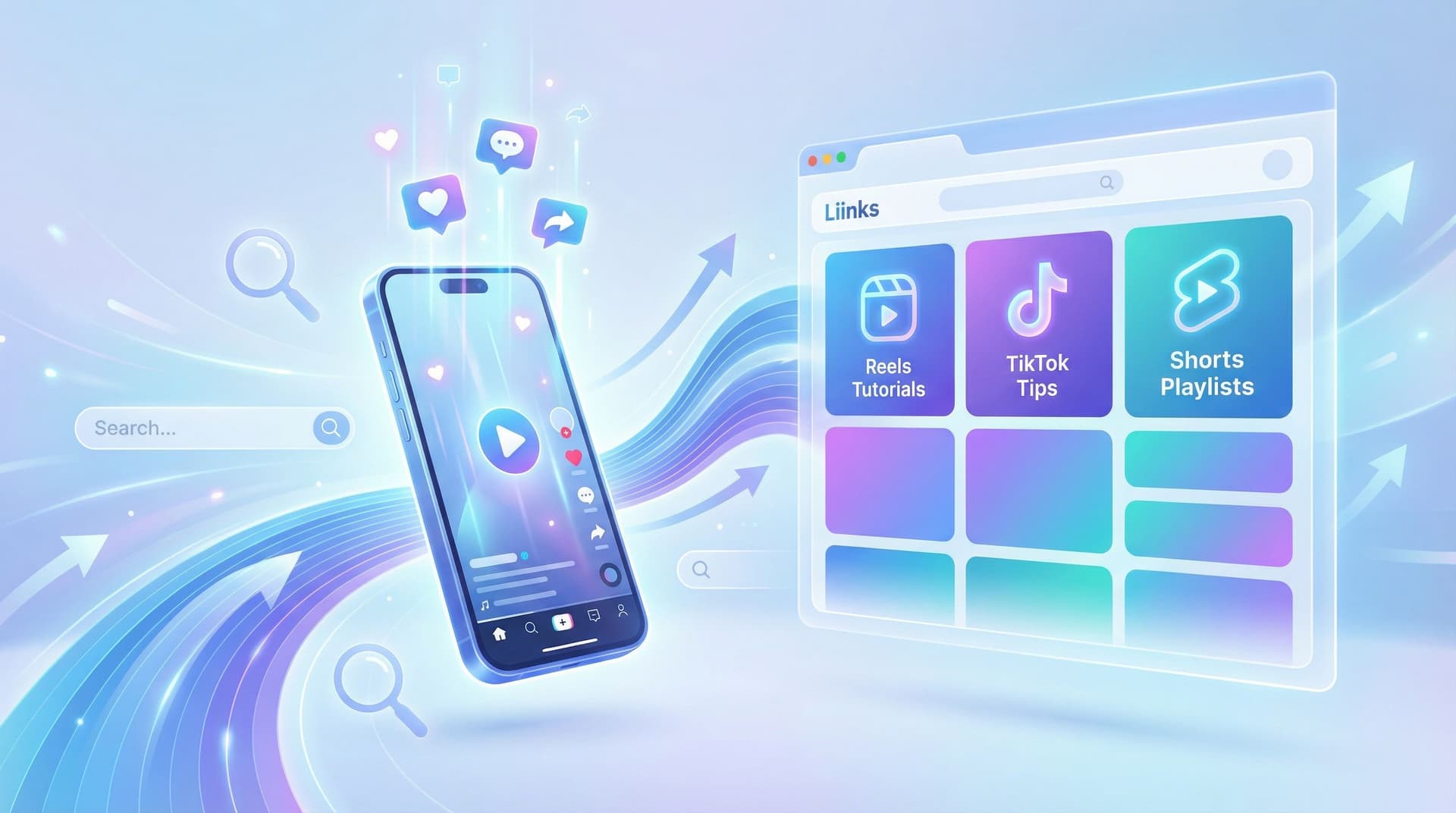
This guide is all about taking the short-form content you’re already making and turning it into a searchable, bingeable hub using Liinks. Think of it as:
SEO, but optimized for people who live in vertical video and don’t want to build a full website.
Why Your Short-Form Content Needs a Search-Friendly Home
Short-form platforms are built for two things:
- Discovery (new people finding you)
- Decay (those posts vanishing into the archive in ~72 hours)
That’s great for reach. It’s terrible for:
- People trying to find “that tutorial you did last month”
- Brand partners who want to see your best work in one place
- Your own sanity when you’re digging through drafts to grab a link or script
Meanwhile, Google and YouTube are quietly becoming the places people search for:
- “TikTok hair stylist LA recommendations”
- “Reels tutorial how to batch film content”
- “creator name presets”
If you don’t have a simple, search-friendly hub that:
- Collects your best Reels/Shorts/TikToks by topic
- Labels them in language people actually type
- Links out to the next step (buy, book, binge, subscribe)
…you’re leaving a lot of search traffic and sales on the table.
A well-structured Liinks page can become that hub without you touching WordPress, hiring a dev, or crying into a DNS settings panel.
Step 1: Decide What You Actually Want to Be Found For
SEO, at its core, is one big “What do you want to be known for?” question.
If your content is all over the place, your search presence will be too. So before you build your Liinks hub, choose 3–5 core themes:
- The problems you solve
- The topics you talk about constantly
- The offers you actually want people to buy/book
Examples:
- A fitness creator might pick: home workouts, nutrition basics, beginner strength, postpartum fitness
- A designer might pick: Canva tutorials, brand strategy, Instagram carousels, creator websites
- A beauty creator might pick: drugstore dupes, skincare routines, curly hair care, makeup for beginners
These become your content buckets and your future SEO categories.
If you want help structuring those buckets, you’ll love our guide on organizing your page so people can actually find stuff: Stop Guessing, Start Grouping: How to Use Content Buckets to Organize Your Liinks Page (So People Actually Find Stuff).
Quick exercise (5 minutes):
- Open your Reels/Shorts/TikTok grid.
- Write down the 3–5 themes that show up over and over.
- Circle the ones that:
- Attract your best followers or clients
- Lead to offers you want to sell
- You’re happy to be known for a year from now
Those circled themes? That’s your hub structure.
Step 2: Turn Each Theme into a Mini “SEO Hub” on Your Liinks Page
Now we’re going to turn those themes into clusters on your Liinks page.
Think of each cluster as:
One topic + a handful of your best short-form videos + one clear next step.
Name Your Clusters Like a Search Bar, Not a Poem
Cute titles are fun. Searchable titles pay your bills.
Instead of:
- Glow-Up Era
- Creator Brain Dumps
Try:
- Glow-Up Skincare Routines for Oily Skin
- Content Planning Tips for Busy Creators
Ask: If my ideal follower Googled this, what would they type? Then use that as your section title.
Inside Each Cluster, Add Links Like This
For each theme, create a section on your Liinks page that includes:
- 1–2 top-of-funnel pieces
Your most viral or most saved short-form videos on that topic. - 1–3 deeper-dive pieces
Tutorials, breakdowns, or “part 2/3/4” videos. - 1 main action link
A link to your offer, opt-in, booking page, or playlist.
Example: “Beginner Strength Workouts at Home” cluster
- "10-Minute Full Body Beginner Workout (No Equipment)" – links to YouTube Short
- "How to Squat Without Knee Pain" – links to TikTok
- "3 Mistakes Beginners Make with Dumbbells" – links to Reel
- "Free 7-Day Beginner Strength Plan" – links to your email opt-in
Now when someone searches your name + “beginner strength,” they land on a page that:
- Clearly matches what they searched
- Shows your best content on that topic
- Gives them one obvious next step
That’s SEO without needing a 20-page site.
Step 3: Make Each Link Do Double Duty for Search
Every link on your Liinks page is a tiny SEO opportunity. You don’t need to keyword-stuff like it’s 2011, but you do want to:
1. Use Clear, Keyword-Rich Titles
Compare these:
- "Watch this" vs. "TikTok: 5 Hook Ideas for Viral Reels and Shorts"
- "New video" vs. "YouTube Short: 3 Lighting Hacks for Facecam Videos"
You want:
- The platform (TikTok, Reel, Short, YouTube)
- The format (tutorial, guide, routine, review)
- The topic + benefit (what it’s about + why they should care)
2. Add Short Descriptions Where It Makes Sense
On your Liinks page, use descriptions to:
- Clarify who it’s for: “Perfect if you’re filming with just a phone and a window.”
- Add natural keywords: “short-form content hooks,” “Instagram Reels ideas,” “TikTok scripts.”
Think human first, search second. If it sounds like something you’d actually say out loud, you’re good.
3. Point Multiple Short-Form Clips to One Evergreen Asset
Don’t create 47 different links for every single video.
Instead:
- Group related videos under one "hub" link (e.g., a playlist, Notion resource, or email opt-in).
- Use your bio link as the constant destination.
If you want a deeper dive into turning viral spikes into long-term traffic, check out From Trend Chasing to Timeless: Turning Viral Content into Evergreen Clicks with a Smarter Link in Bio.
Step 4: Sync Your Short-Form Captions with Your Liinks Hub
If your captions say one thing and your bio link says another, Google gets confused—and so do humans.
Let’s make them work together.
Add a Consistent “Search-Friendly” Line to Your Captions
At the bottom of relevant Reels/Shorts/TikToks, add a line that:
- Repeats your main keyword
- Points people to the matching hub on your Liinks page
Examples:
- “Want more beginner strength workouts at home? Tap my bio and open the ‘Beginner Strength Workouts at Home’ section.”
- “More Canva carousel tutorials are saved in my ‘Canva for Creators’ hub—link in bio.”
This does three things:
- Trains your audience to expect organized hubs in your bio.
- Adds consistent language across platforms (which search engines like).
- Makes it easier for people to remember what to look for later.
Use the Same Phrases Across Platforms
Try to use similar wording for:
- Your Liinks section titles
- Your short-form captions
- Your YouTube titles or podcast episodes
For example, if your Liinks section is called “SEO for Social-Only Creators”, don’t call it "Get Found Online" in your captions and "Visibility Tips" on YouTube. Pick a phrase and commit.
If you’re curious how far you can go with search using just your Liinks page and socials, read Algorithm-Proof SEO: How to Get Found on Google with Just Your Liinks Page and Social Profiles.
Step 5: Build a “Start Here” Hub for New Binge-Watchers
Every creator has that moment where a video pops off and floods your profile with new people.
Most of them:
- Watch the viral one
- Maybe tap your profile
- Get overwhelmed
- Leave
A simple "Start Here" hub on your Liinks page can quietly fix that.
What Goes in Your Start Here Hub
Think of this as your short-form greatest hits + clear next steps:
- 1–3 best short-form videos that explain who you are / what you do
- 1–3 topic-based hubs (those clusters from Step 2)
- 1 main offer or opt-in (newsletter, free guide, mini-course, discovery call)
Example layout:
- "Watch: My Story in 60 Seconds (TikTok)"
- "Watch: What I Do for Creators (Reel)"
- "Binge: Content Planning Tips for Busy Creators" (links to that cluster)
- "Binge: Short-Form Video Hook Ideas" (another cluster)
- "Grab My Free 30-Day Content Calendar" (email opt-in)
Now when someone taps your bio link, they’re not dropped into a random link pile. They’re gently onboarded into your world—something we unpack even more in From Casual Fan to Community Member: How to Use Your Link in Bio to Quietly Onboard Superfans.
Step 6: Make Your Liinks Page Look as Good as Your Content
SEO isn’t just about keywords. People bounce from ugly, confusing pages—fast.
The good news: Liinks was built for creators who care about aesthetics and function.
A few design tweaks that quietly help both:
-
Use clear visual grouping
Separate each hub with headings, spacing, or background blocks so people can scan. -
Prioritize your top 3 hubs above the fold
The stuff you most want to rank for and send traffic to should live near the top. -
Use consistent colors and icons
For example, all "education" hubs use one color; all "shop" or "affiliate" hubs use another. This trains people to recognize what type of click they’re making. -
Keep it one-scroll friendly
People should understand who you are and what you offer within a single smooth scroll.
For more design-nerd meets SEO-nerd goodness, check out Aesthetic Meets Algorithm: How Design Choices on Your Liinks Page Quietly Boost SEO.
Step 7: Track What’s Working (Without Becoming a Spreadsheet Goblin)
You don’t need to obsess over every metric, but you do want to know:
- Which hubs people click most
- Which short-form videos send the most traffic
- Which links actually lead to sales, signups, or bookings
Inside Liinks, keep an eye on:
- Top-clicked links – Which topics actually get attention?
- Click-through on your main offer links – Are people moving from short-form bingeing to taking action?
Then:
- Double down on topics that perform well.
- Retire or rename hubs that no one touches.
- Test different titles or thumbnail styles for low-performing links.
Think of it as gentle optimization, not a full-time job.
Quick Recap: Your Short-Form SEO Game Plan
Let’s pull this together so you can go implement instead of just nodding along.
- Pick your 3–5 core themes.
These become your content buckets and Liinks hubs. - Create themed clusters on your Liinks page.
Each one = best short-form videos + one clear next step. - Write search-friendly titles and descriptions.
Use natural language your audience actually types. - Sync your captions with your hubs.
Use a consistent line that points people to the matching section. - Build a "Start Here" hub for new followers.
Guide them from viral video → understanding → next step. - Make it pretty and clear.
Clean design, strong headings, one-scroll clarity. - Check your analytics and adjust.
Keep what works. Tweak what doesn’t. No drama.
Do this, and you’re not just "adding a link in bio." You’re quietly building a searchable, bingeable mini-site powered entirely by the short-form content you’re already making.
Your Next Step (Yes, This Is the Part Where You Take Action)
You don’t need a full rebrand or a six-week sprint to get started.
Here’s a tiny, doable challenge for the next 30 minutes:
- Log into Liinks.
- Create one new section named after a topic you want to be found for.
- Add:
- 2–3 of your best Reels/Shorts/TikToks on that topic
- 1 link to your main offer, opt-in, or playlist
- Update the captions on your next 2–3 short-form posts to point people to that new hub.
That’s it. You just built your first short-form SEO hub.
Next time someone comments, "Do you have more videos like this?" you won’t have to dig. You’ll just say:
"Yep—check the ‘[Your Hub Name]’ section in my bio. It’s all there."
And underneath the aesthetics and the vertical videos, that’s what this is really about: making it ridiculously easy for the right people to find the right thing from you, at the exact moment they’re ready.
Go build the hub. Your future superfans (and your future search traffic) will thank you.