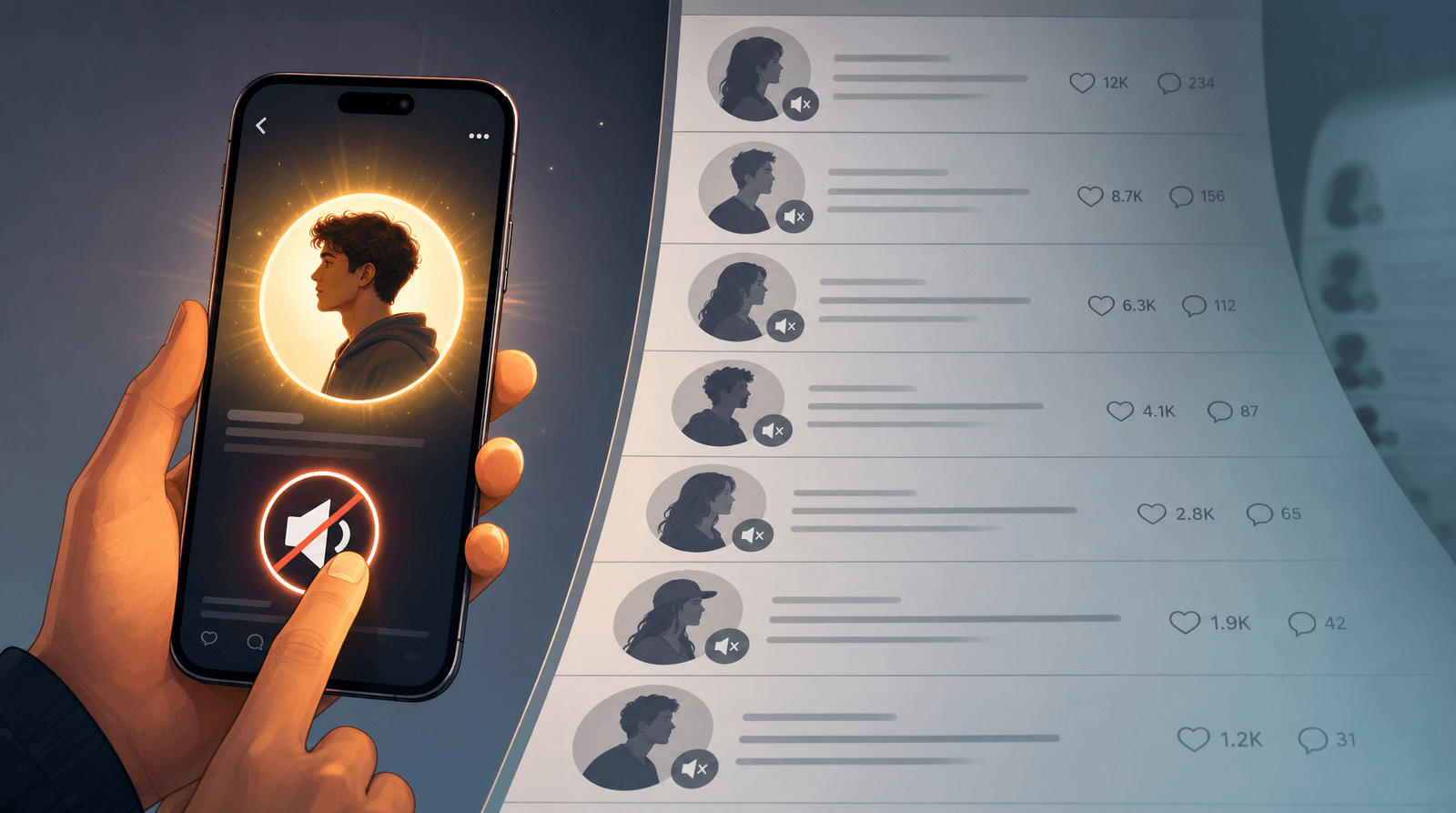
From Casual Fan to Community Member: How to Use Your Link in Bio to Quietly Onboard Superfans

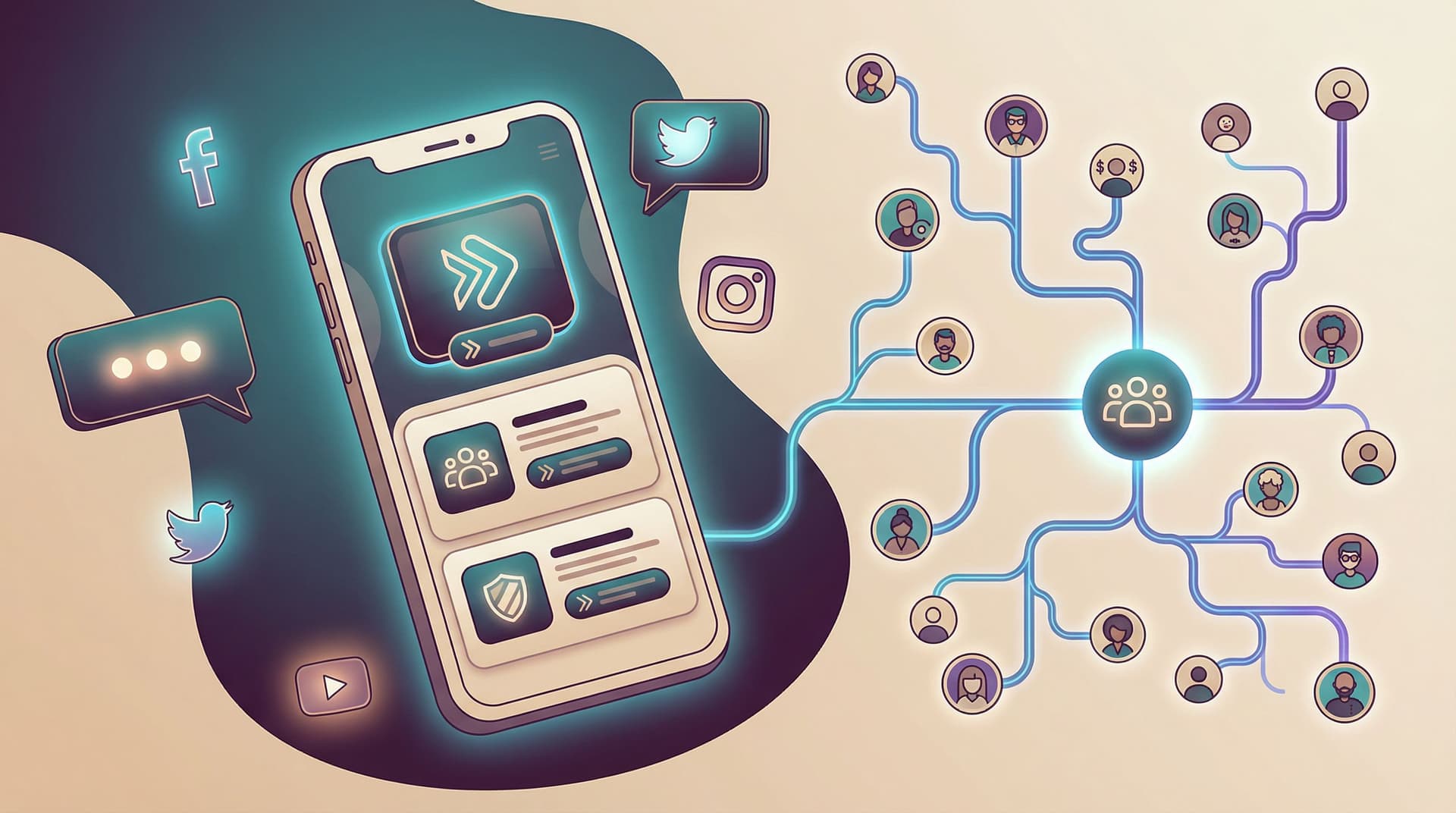
You don’t build a thriving creator business on views.
You build it on the tiny percentage of humans who:
- Watch everything you post
- Open every email
- Buy the thing and tell their friends
- Low‑key feel personally offended if they miss a drop
Those are your superfans. And your link in bio is one of the easiest places to quietly turn more casual followers into that kind of person—if you treat it like a gentle onboarding ramp instead of a random list of links.
In this post, we’ll walk through how to design a link-in-bio strategy that:
- Filters for your most engaged people
- Gives them a clear path from “I like this creator” to “I’m in the community”
- Does it all without feeling pushy, salesy, or cult-adjacent
Along the way, we’ll talk about how tools like Liinks help you make that ramp look good and work hard.
Why superfans deserve their own plan (and not just vibes)
A quick reality check: most of your audience is casually interested. That’s fine. But a tiny slice is doing the heavy lifting.
Recent creator and fandom data keeps repeating the same story:
- Superfans are often just 1–2% of an audience but can drive ~50% of revenue from things like merch and memberships.
- In music, analysts estimate that better “superfan monetization” alone could unlock billions of dollars in additional revenue over the next few years.
- Platforms from TikTok to niche fan apps are literally redesigning their features around paid superfan tiers.
Translation: the people who are already obsessed with you are your best growth strategy.
But here’s the catch: superfans don’t announce themselves with a form that says, “Hello, I am ready to spend more money and time.” They reveal themselves through behavior:
- They click more than once
- They opt into deeper spaces (Discord, email, membership, etc.)
- They show up again tomorrow
Your link in bio is where a lot of that behavior starts. It’s the first moment someone says, “Okay, show me more.” If that moment is chaotic, confusing, or one-size-fits-all, you’re wasting the opportunity.
What if, instead, that tap on your bio link was the first step of a quiet onboarding sequence into your community?
Step 1: Decide what “community member” actually means for you
Before you start rearranging buttons, you need a definition. For you, what counts as someone having “joined” your community?
Some options:
- Email subscriber – they’re on your list and open regularly
- Private space member – Discord, Circle, Geneva, Slack, Facebook Group, Mighty Networks, etc.
- Paid supporter – Patreon, membership, paid newsletter, close friends list, subscriber-only chat
- Product ecosystem person – they’ve bought at least one thing and are on your customer list
Pick one primary “community conversion” and one secondary. Examples:
- Primary: Join my free Discord
- Secondary: Join my newsletter
or
- Primary: Join my paid membership
- Secondary: Grab my free starter guide (warms them up for membership later)
Everything else on your link in bio will orbit around those.
If everything is a priority, nothing is a path.
Step 2: Turn your link in bio into a tiny, guided journey
Most link-in-bio pages are a flat menu:
Here are 17 things I do. Good luck.
To quietly onboard superfans, you want a stacked journey, not a buffet. Someone taps your link and is gently guided from:
- Orientation – Who are you and what’s the point here?
- Quick win – Something easy and valuable they can grab or do right now.
- Deeper connection – The first true “community” action.
- Optional rabbit holes – For the people who want to binge.
With a flexible tool like Liinks, you can design this visually with sections, headings, and on-brand buttons instead of a generic list.
A simple layout might look like:
- Hero section – 1–2 lines about who you are + your main promise
- Start here – One primary button that’s impossible to miss
- Go deeper – Links to your community spaces and core offers
- Explore more – Playlists, resources, UGC, press, etc.
If you’re not sure how to group all your existing links into something that makes sense, bookmark this post on content buckets for later: Stop Guessing, Start Grouping: How to Use Content Buckets to Organize Your Liinks Page (So People Actually Find Stuff).
Step 3: Design a “Start Here” path that feels like a favor, not a funnel
Your “Start Here” moment is where casual fans either:
- Take a small step toward you, or
- Bounce and never think about it again
To make that step irresistible and community-oriented, ask:
“What’s the smallest, most generous thing I can give someone that also signals they’re my kind of person?”
Some ideas:
- A starter playlist (for music, podcasts, YouTube)
- A mini guide (PDF, Notion doc, email series)
- A challenge (5 days, 3 prompts, etc.)
- A welcome video that explains how to get the most out of following you
- A “choose your path” quiz that segments them by interest
On your Liinks page, this might look like:
- A bold heading: Start Here (New? Do this first.)
- One big, visually distinct button
- A subline that sells the benefit, not the mechanism
Examples:
-
Get the 7‑Day Habit Reset
Free email series to fix your mornings without waking up at 5 a.m. -
Watch the 10‑Minute ‘New Here’ Tour
I’ll show you what to binge first, how to join the community, and where the good stuff lives. -
Find Your Creator Archetype
2‑minute quiz that tells you what to make next (and what to stop doing).
The key: this first step should feel like a gift that just so happens to move them into your ecosystem (email, SMS, private group, etc.).
Step 4: Build a quiet “ladder” into community spaces
Once someone takes that first step, your job is not to scream, “JOIN MY PAID THING.”
It’s to offer a ladder of increasing commitment that feels natural.
Think of it like this:
- Low commitment – follow, subscribe, grab a freebie
- Medium commitment – join a free community space or live event
- High commitment – join a paid membership, mastermind, or product ecosystem
Your link in bio can mirror that ladder.
Example ladder layout
On your Liinks page, create sections like:
1. Stay in the loop
- Newsletter signup
- YouTube/TikTok/Podcast follow links
2. Join the community
- “Free Discord for X”
- “Book club sign‑up”
- “Creators’ coworking sessions (free)”
3. Work with me / Support the work
- Paid membership
- Courses, templates, products
- 1:1 or group offers
Each section should:
- Have a short one‑line explanation
- Make the next step obvious
- Avoid overwhelming people with 12 similar buttons
If you’re juggling lots of offers, this post on structuring your offer menu will help: The Creator’s Offer Menu: Structuring Your Liinks Page So No Click Is a Dead End.
Step 5: Give superfans something to do once they arrive
Community isn’t “we are all technically in the same Discord server.”
Community is:
- Shared language
- Shared rituals
- Shared projects or experiences
Your link in bio can set those in motion by pointing people not just to places, but to actions.
Instead of:
- “Discord server”
Try:
- Join the Discord – Introduce yourself in #start-here and share your current project.
Instead of:
- “Newsletter”
Try:
- Weekly Deep Dive Email – Every Wednesday I send one unfiltered breakdown + one experiment you can steal.
Instead of:
- “Membership”
Try:
- Creator Lab Membership – Monthly workshops, feedback calls, and behind‑the‑scenes breakdowns. Doors open 3 days/month.
You’re not just linking to containers; you’re linking to behaviors.
Step 6: Use design to quietly signal “this is for insiders”
Superfans love feeling like they’re in on something.
Your link in bio can reinforce that feeling through design choices:
- Visual hierarchy – Make community actions visually distinct from generic links (badges, icons, color, or placement).
- Microcopy – Use language only your people would recognize (nicknames, recurring bits, in‑jokes).
- Sections that feel like “backstage” – e.g., “For the Real Ones,” “Backstage Pass,” “Builder Mode,” etc.
With a tool like Liinks, you can:
- Use different button styles for “public” vs “community” links
- Add section headers and dividers to create a clear “front of house / backstage” separation
- Keep the whole thing on‑brand so it doesn’t look like a default, beige link list
If you want to go deep on how design choices affect performance, check out: Aesthetic Meets Algorithm: How Design Choices on Your Liinks Page Quietly Boost SEO.
Step 7: Create one “superfan lane” and track it ruthlessly
You don’t need twelve funnels.
You need one clear path that turns a stranger into a community member, and a way to see if it’s working.
A simple superfan lane might be:
TikTok → Link in bio → “Start Here” freebie → Email sequence → Invite to free community → Invite to paid membership
How your link in bio supports that lane:
- The main CTA on your Liinks page is the freebie or “Start Here” action.
- The second section highlights the free community.
- The third section introduces the paid membership.
Then, watch:
- Which link gets the most clicks?
- How many people who grab the freebie end up joining the community?
- How many community members eventually buy?
If you’re using Liinks, you can keep an eye on click data and tweak copy, order, or design based on what people actually do—not what you assume they’ll do.
Over time, this lets you:
- Spot which platforms send the most “superfan energy” (e.g., maybe YouTube traffic is 3x more likely to join community than Instagram)
- Test small changes like swapping button order or changing “Join my newsletter” to “Get the Sunday Strategy Email”
- Retire dead links that don’t move anyone closer to community
Step 8: Make it easy for superfans to self-identify
Superfans want a way to raise their hand and say, “I’m in.” Your link in bio is a great place to offer that badge of honor.
Ideas:
- “Superfan Starter Pack” – a bundle of your best content, templates, or behind‑the‑scenes clips
- “Founding Member” tier for your community or membership
- “Inner Circle” or “Close Friends” list with early access links
On your Liinks page, you might add a section like:
For the Real Ones 💥
Already deep in my stuff? These are for you.
Buttons:
- Apply for the Inner Circle
- Become a Founding Member
- Grab the Superfan Starter Pack
You’re not forcing anyone into that lane—but you’re giving your most engaged people a clear door.
Step 9: Keep the experience calm, not chaotic
The biggest reason people don’t go deeper isn’t lack of interest. It’s overwhelm.
If your link in bio feels like:
- A chaotic list of everything you’ve ever done
- A mix of old freebies, dead offers, and inside jokes from 2021
- A puzzle people have to solve
…they’ll just back out.
A few guardrails:
- Limit top‑level choices – Aim for 3–5 core actions above the fold.
- Archive ruthlessly – If a link doesn’t support your current superfan lane, either group it under “More” or remove it.
- Update seasonally – Your community focus might change; your page should too.
If you’re juggling multiple platforms and offers, this post pairs nicely with what you’re reading now: The Creator’s Anti-Overwhelm Stack: Using Liinks to Simplify 5 Different Platforms into One Calm Hub.
Putting it all together: a quiet superfan onboarding blueprint
Let’s recap what a “quietly onboarding superfans” link in bio actually looks like:
-
Clear definition of “community member”
You know whether you’re optimizing for email, Discord, membership, or something else. -
Guided layout, not a random list
Orientation → Quick win → Deeper connection → Optional rabbit holes. -
One generous “Start Here” action
Feels like a favor, doubles as your main funnel entry. -
A visible ladder of commitment
Low → medium → high, with each step clearly labeled. -
Action‑oriented copy
Every link tells people what to do and what they’ll get. -
Design that signals “backstage”
Visual hierarchy, insider language, and sections for your real ones. -
One main superfan lane you actually track
You know your ideal path from stranger to community member and you watch the numbers. -
A clear way for superfans to self‑select
Inner circle, starter pack, or founding member offers. -
Calm, intentional curation
Fewer, better links; updated regularly; aligned with your current season.
A flexible, good‑looking tool like Liinks makes this much easier than trying to hack it together with a default, generic link hub. You get the visual control to make the journey feel like you, and the structure to make sure every tap has somewhere meaningful to go.
Ready to quietly onboard your own superfans?
You don’t need a huge audience to make this work.
You need:
- A clear idea of what “community” means for you
- One simple path from casual fan to community member
- A link in bio that guides people along that path without yelling
Your next move:
- Open your current link in bio.
- Ask: “If someone loves my content and taps this, is it obvious what to do next?”
- If the answer is anything other than a confident yes, it’s time for a refresh.
Set up or rework your page using Liinks, define your “Start Here” action, and build that quiet ladder into your community. Then give it 30 days and watch who shows up again and again.
Those repeat names? Those are your future superfans.
Make it easy for them to find their people—starting with you.