Your Homepage Is Overrated: When a Liinks Page Should (and Shouldn’t) Replace a Full Website

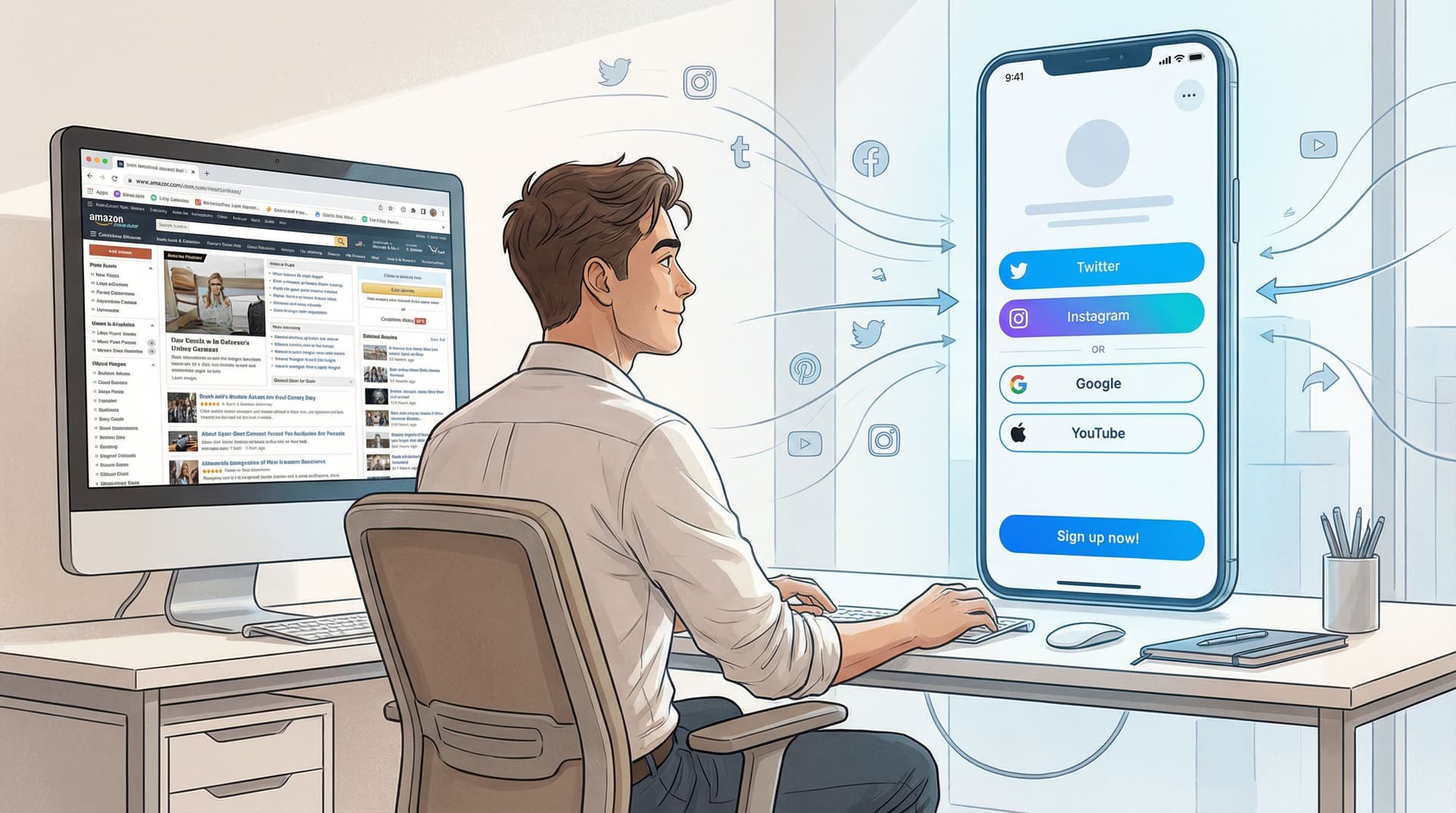
Hot take: a lot of creators don’t have a “website problem.” They have a “too-many-tabs-and-not-enough-clarity” problem.
You’re told you need a full website to look legit. Meanwhile, most of your traffic is coming from one tiny URL in your bio… that you haven’t updated since the last time you rage-quit WordPress.
Here’s the twist: for a huge chunk of people, a polished Liinks page can do the job of a homepage—and sometimes do it better.
But not always.
Let’s talk about when your Liinks page should be the star of the show, when it’s a supporting character, and when you really do need that full-blown site.
Why This Question Actually Matters
This isn’t just a “which tool is cooler” debate. It’s about:
- Time – Are you spending hours tweaking a site nobody visits while ignoring the page everyone actually clicks?
- Money – Are you paying for hosting, templates, and plugins when a lean setup would convert just as well (or better)?
- Momentum – Are you delaying offers, launches, and collabs because “the website isn’t ready yet”?
Most creators don’t need a 10-page site. They need:
- One clear hub
- A handful of high-intent actions
- A page that looks good, loads quickly, and doesn’t break every time you breathe near the backend
That’s exactly where a well-designed Liinks page can either:
- Replace your homepage entirely, or
- Sit in front of your site as the fast, focused “concierge desk” that routes people to the right place.
First, Be Honest: What Is Your Homepage Actually Doing?
Before you decide what should replace what, ask: what is your current homepage for?
If you stripped away the fancy layout, your homepage is basically trying to:
- Tell people who you are and what you do
- Show them what’s important right now
- Give them 1–3 clear next steps
Now ask yourself:
- How many people actually land on your homepage vs. specific links, landing pages, or your bio link?
- When you update your priorities (new offer, launch, collab), which gets updated first: your homepage or your link in bio?
- Does your homepage feel like a clear hub—or a museum of every idea you’ve had since 2019?
If most of your traffic is coming from social, your “real homepage” is already your link in bio. You’re just pretending it’s not.
For more on how that tiny page shapes trust (and how to avoid looking like a group project from freshman year), you’ll want to read Link-in-Bio Red Flags: Design and Copy Mistakes That Make You Look Less Credible (and How to Fix Them).
When a Liinks Page Can Totally Replace a Full Website
Let’s start with the fun part: all the scenarios where you can skip the “I need a full site” spiral and let your Liinks page be the main character.
1. You’re a Service Provider Who Just Needs Bookings
You don’t need five subpages and a parallax hero section. You need people to understand what you offer and how to hire you.
A Liinks page can absolutely be your “website” if:
- You’re a freelancer or consultant (designer, copywriter, VA, coach, photographer, etc.)
- You’re booking through tools like Calendly, Acuity, Dubsado, or HoneyBook
- Your portfolio lives on platforms like Notion, Behance, Dribbble, or Google Drive
Your Liinks page becomes:
- A short intro (who you help + how)
- 1–3 core offers with clear labels
- One main booking link (discovery call, application, or direct booking)
- Optional portfolio / case study links
If that sounds like exactly what you need, bookmark From Followers to Freelance Clients: Turn Your Liinks Page into a Booking Machine (Without a Full Website) for later—it walks through this setup in detail.
2. You’re Testing Offers or Pivoting Your Brand
If your business is still in “let’s see what sticks” mode, a full website can actually work against you. Every change feels heavy:
- New niche? Rebuild the nav.
- New offer? Rewrite three pages.
- New direction? Rework the entire homepage.
Meanwhile, a Liinks page lets you:
- Swap links in minutes
- Reorder priorities based on what’s working
- Soft-launch new offers without rewriting your whole site
It’s the perfect setup if you’re:
- Rebranding
- Moving from one niche to another
- Stacking new offers on top of your original thing
If you’re in that messy middle, you’ll love One Link, Many Niches: How to Use Liinks When You’re Rebranding, Pivoting, or Still Figuring It Out.
3. You’re a Creator Whose “Products” Live Elsewhere
If your main “offers” are:
- YouTube videos
- Podcasts
- Etsy or Shopify products
- Gumroad / Lemon Squeezy / Stan Store links
- Courses hosted on platforms like Teachable, Kajabi, or ThriveCart
…then your job isn’t to build a huge site. It’s to route traffic cleanly.
A Liinks page can act as your:
- Content hub – playlists, series, or “start here” content
- Shop directory – featured products, bundles, or seasonal promos
- Email growth engine – one clear opt-in form or lead magnet
In this case, a full website is nice-to-have, not must-have.
4. You’re Early-Stage and Speed Matters More Than Perfection
If you’re just starting out, a full website can become the Ultimate Procrastination Project:
- “I can’t launch until my site is done.”
- “I can’t pitch brands until the portfolio page is perfect.”
- “I can’t raise my rates until my offers look more official.”
A Liinks page lets you:
- Look polished within an afternoon
- Start sending traffic somewhere strategic
- Iterate as you go, instead of waiting for a mythical “perfect site” day
If you want a simple, structured way to do this, check out From ‘Link in Bio’ to Legit Portfolio: A No-Code Client Hub You Can Build on Liinks in an Afternoon.
When a Liinks Page Should Not Replace Your Website
Now for the part nobody likes to hear: sometimes you really do need a full site.
A Liinks page is powerful, but it’s not meant to be:
- A legal library
- A 40-post blog
- A complex e‑commerce engine
Here are some red flags that you’ve outgrown a Liinks-only setup.
1. You Need Deep, Long-Form Content to Sell
If your sales process relies on:
- Detailed case studies
- Long-form blog content for SEO
- In-depth product education or comparison pages
…you’ll probably want a full site plus a Liinks hub.
Why?
- Long, scroll-heavy pages aren’t what people expect from a link-in-bio hub
- You’ll want dedicated URLs for content marketing, guest posts, and SEO
- Some readers still expect a “Resources” or “Blog” section they can browse
Use Liinks as the front door, and your site as the library.
2. You’re Running a Larger E‑Commerce or Membership Business
If you’ve got:
- Dozens or hundreds of products
- Complex filtering, cart behavior, or checkout flows
- A membership area, course platform, or logged-in experience
…you’re solidly in “full website plus Liinks” territory.
Your Liinks page is still incredibly useful here—it becomes the:
- Promo hub for current campaigns, launches, or bundles
- Quick path to your main collections or offers
- Highlight reel for your highest-converting pages
But it shouldn’t be the only place your business lives.
3. You Work With Bigger Brands, Institutions, or Agencies
Some industries still expect a traditional website:
- B2B consulting
- Corporate training
- Agencies pitching enterprise clients
- Creators working with big-name sponsors
Will some brands happily evaluate you from a Liinks page + socials? Absolutely.
Will others quietly side-eye you if there’s no website at all? Also yes.
The move here:
- Use your Liinks page as your “living media kit” and up-to-date hub
- Maintain a simple, professional site that checks the “they’re legit” box for more formal stakeholders
If you’re still sending static PDFs to brands, you might also want to graduate to a live media kit built on Liinks instead of juggling files.
4. You Need Heavy-Duty SEO As a Primary Growth Channel
If your business model depends on ranking for search terms (“wedding photographer in Austin,” “pricing strategist for SaaS,” etc.), a full website with:
- Optimized landing pages
- Blog posts
- Local SEO structure
…is going to be more useful than a single hub page.
That said, your Liinks page can still:
- Capture traffic from social
- Route people to key SEO pages
- Highlight your most important content and lead magnets
Think: site = you being discovered; Liinks = you directing already-warm traffic.
The Sweet Spot: Liinks + Website Working Together
This isn’t a cage match. Your homepage and your Liinks page can be friends.
Here’s how they can tag-team:
Let Liinks Be the “Now” Page
Your website is the house. Your Liinks page is the front desk with a sign that says “Here’s what’s happening this week.”
Use Liinks for:
- Current launches or promos
- Your primary lead magnet
- Your most relevant offer(s)
- Any time-sensitive campaigns
Use your website for:
- Evergreen info (about, services, FAQs)
- Deep dives (case studies, blog posts, resources)
- SEO and discoverability
Use Liinks to Simplify Your Site Navigation
Most homepages try to do too much. Instead of stuffing everything into your main nav, you can:
- Put a prominent “Start Here” or “Work With Me” button that goes to your Liinks page
- Use Liinks as a curated, conversion-focused menu that’s easier to update than your site
This way, you only touch your website when something truly structural changes—but your Liinks page can evolve weekly.
Turn Your Liinks Page Into a Micro-Funnel
Instead of sending people to a generic homepage and hoping they find the right spot, your Liinks page can:
- Segment visitors by intent: “I’m a brand,” “I’m a client,” “I’m here for content”
- Give each group a super-clear next step
- Highlight 1–3 “hero” actions instead of 20 distractions
If you want to go deeper on small tweaks that make people actually click, Beyond Aesthetics: Micro UX Tweaks on Your Liinks Page That Quietly Double Click-Through Rate is your next stop.
How to Decide: Liinks-Only, Site-Only, or Both?
If you’re stuck, use this quick decision guide.
Go Liinks-Only If…
- You’re early-stage and just need a legit hub
- Most of your traffic comes from social
- Your offers live on other platforms (booking tools, course platforms, shops)
- You want to move quickly and iterate often
Your must-haves:
- Clear positioning at the top (who you help + how)
- One main CTA (book, buy, subscribe, apply)
- Clean design that matches your brand
- Minimal links (5–7 is plenty for most people)
Go Site + Liinks If…
- You’re established and need depth (blog, case studies, resource library)
- You care about SEO and organic search
- You work with more formal clients or brands
- You sell multiple offers or product lines
Your setup:
- Liinks page as your “live hub” and campaign control center
- Website as your deep-dive, SEO, and credibility foundation
- Clear cross-linking between the two (Liinks links to key pages; site links back to Liinks for current promos)
Go Site-First (Liinks Optional) If…
Honestly? This is rare for creators.
But it might be you if:
- You’re running a search-driven content or e‑commerce business with little social presence
- Most people find you via Google, referrals, or direct traffic
- Your audience rarely taps your social bio link
Even then, a simple Liinks page is still useful as a clean, branded shortcut URL you can drop in podcasts, print materials, or email signatures.
Quick Start: Turn Your Liinks Page Into a Homepage Stand-In
If you’re ready to let your Liinks page act as your homepage (for now or forever), here’s a simple build:
-
Write a one-line intro
Example: “Brand designer helping creators turn ‘just vibes’ into visual identities that actually convert.” -
Pick one primary goal
- Book a discovery call
- Sell one main offer
- Grow your email list
-
Create 3–5 core buttons
- Your main offer or “Work With Me”
- Your best lead magnet or newsletter
- A “Start Here” content playlist or portfolio
- Optional: a link specifically for brands or collabs
-
Make it look like your brand on purpose
- Choose 1–2 brand colors, 1 accent color
- Use consistent button styles and spacing
- Add a simple, on-brand header image or avatar
-
Run everything through the “stranger test”
Ask a friend who doesn’t fully get what you do to:- Look at your page for 10 seconds
- Tell you what you do and what they’d click first If they’re confused, simplify.
-
Update it before you update anything else
Launching something? Changing your focus? Your Liinks page gets the news first. Your website can catch up later.
The Short Version (Because You’re Busy)
- Your “real homepage” is wherever people land first—and for most creators, that’s your link in bio.
- A strong Liinks page can absolutely replace a full website if you:
- Sell services through booking links
- Host products or content on other platforms
- Are testing offers, pivoting, or just starting out
- You still need a full site when:
- SEO and long-form content are central to your strategy
- You’re running complex e‑commerce or memberships
- You work in spaces where formal websites are expected
- The power move for many: Liinks as your living, always-current hub + a simple site as your deep-dive home base.
Your Next Move
If your homepage is stressing you out and your link in bio is quietly doing all the real work… that’s your sign.
You don’t have to:
- Finish the perfect website before you sell
- Map out a 12-page site architecture
- Hire a developer to change one headline
You can:
- Spin up a polished Liinks page
- Treat it like your primary homepage for the next 90 days
- Watch what people actually click—and build your future site around that, not guesses
Start small: write your one-line intro, pick your main CTA, and set up 3–5 links that actually matter.
Your audience doesn’t need more pages. They need one clear path. Let your Liinks page be that path—and let your “overrated” homepage earn its keep later.