
Think about the last account you got tired of.
Maybe they posted too much. Maybe every story turned into a pitch. Maybe you followed them for one thing and they slowly became about something else. Whatever it was, you reached a point where you did not want to see their stuff anymore.
Did you unfollow them?
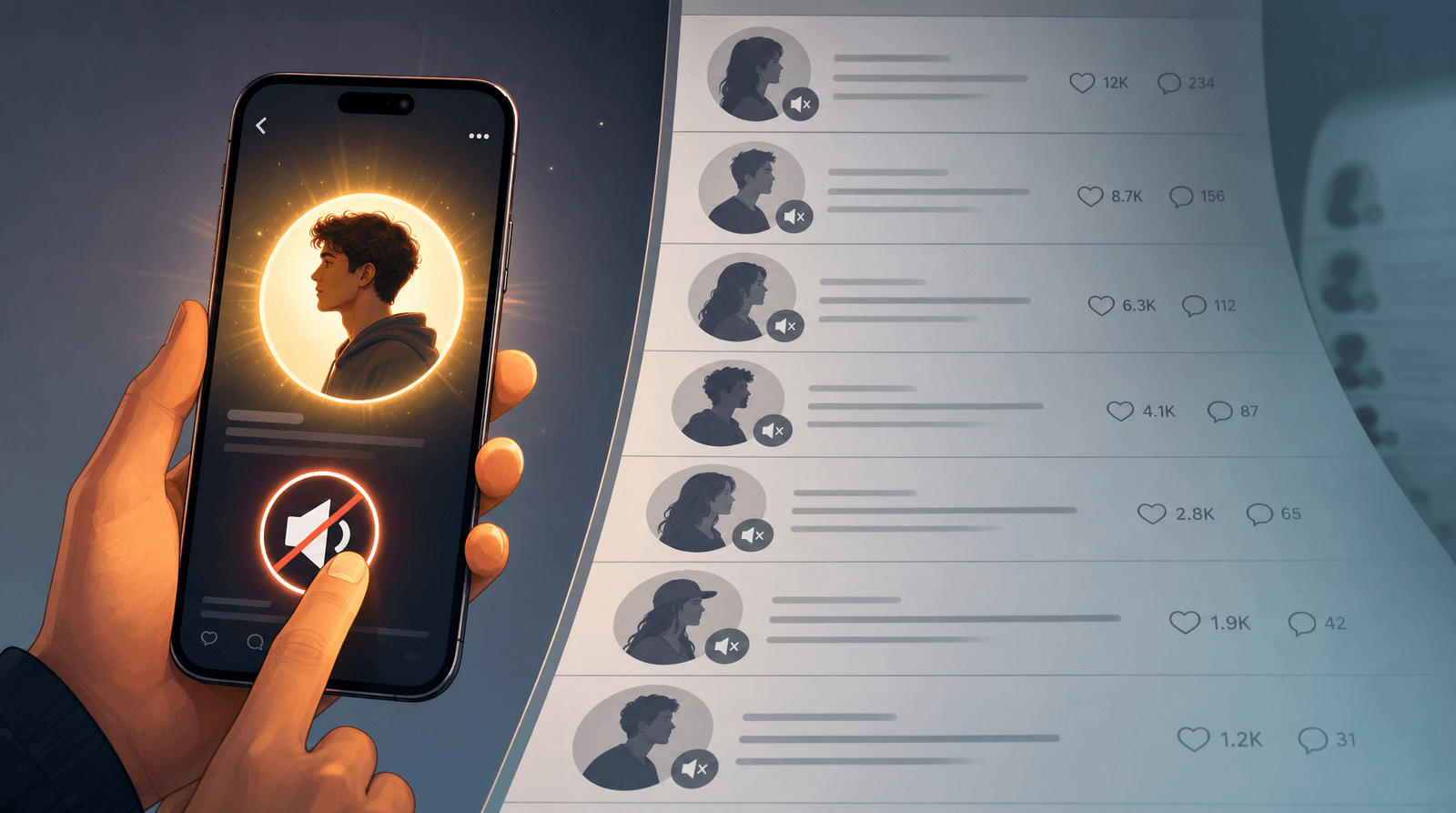
Probably not. Unfollowing feels like a statement. It is a small social act with a tiny bit of confrontation baked into it, and there is always the chance they notice. So you did the quiet thing instead. You muted. You hid. You scrolled a half-second faster every time their face appeared. And from their side of the screen, absolutely nothing happened. Their follower count did not move. Their profile still says you are there. As far as their analytics are concerned, you are still a fan.
That is the strange, slightly unsettling truth of building an audience in 2026. The exit is silent, and you are never told it happened.
Nobody quits loudly anymore
The unfollow used to be a real signal. In the early days of social, your following list was small and curated enough that you actually managed it. You added people you liked, and when you stopped liking them, you removed them. The number went down, and it meant something.
Then feeds got huge, algorithms took over, and the whole relationship changed. Your following list stopped being a list of people you want to hear from and started being a pile of accounts you accumulated over a decade. Nobody prunes it. Nobody has time. And every platform, sensing an opportunity, added a softer option: mute, hide, snooze, "show fewer posts like this," "not interested." Every one of those is a way to break up with an account without breaking the number.
The platforms did this on purpose, and honestly, from their perspective it is smart design. An unfollow is friction. A mute is frictionless, invisible to both parties, and keeps the graph intact. Everyone stays connected on paper. The only person harmed is you, because the one clear piece of negative feedback you used to get has been replaced with silence that looks exactly like success.
Meanwhile, the algorithm quietly agrees with the mute. It notices that this person never stops on your posts, never taps, never lingers, and it stops showing them your work. You have not lost a follower. You have lost a reader, a viewer, a customer, and a vote. The scoreboard just refuses to say so.
So you end up in the most common trap in creator analytics: a number that only goes up, describing a relationship that is quietly going down.
Your follower count is a graveyard with excellent lighting
Here is the part that stings. That follower number you screenshot when it crosses a round milestone is not a measure of your audience. It is a measure of everyone who has ever, at any point, tapped a button on your profile and not gone to the effort of undoing it.
It includes the people who followed you for a giveaway two years ago. It includes the accounts that have not been opened since 2023. It includes the bots, the lurkers who genuinely love you, and the people who muted you in March. All of them count exactly the same, which means the number tells you almost nothing you can act on.
We have made this argument before in a different shape, that you don't need more followers, you need better clicks. The mute button is the reason why. When the cost of leaving is zero and the leaving is invisible, follower growth and audience health can drift apart for months without you noticing. You can gain 5,000 followers and lose 8,000 real readers in the same quarter, and the graph will show a beautiful line going up and to the right.
This is also why so many creators describe the same confusing feeling: the account keeps growing, and the business keeps getting harder. More followers, fewer sales. More reach, fewer replies. It is not a mystery and it is not bad luck. It is attrition you were never shown.
The honest reframe is this. Your follower count is an all-time cumulative total, like the number of people who have ever walked into a store. What you actually want to know is how many people are in the store right now, and whether they are buying anything.
The signals that tell you the truth
You cannot see mutes. No platform will ever show you that number, because showing it would be an admission of how thin engagement really is. But muting leaves fingerprints, and they are visible if you know what to look for.
Engagement rate, not engagement volume
Raw likes and comments are useless for spotting silent churn, because they scale with reach. What matters is engagement as a percentage of the audience you supposedly have. If your following grows 40 percent and your engagement rate drops 40 percent, you did not gain an audience. You gained a denominator. Track the ratio over months, not weeks, and watch the direction of travel rather than any single number.
The gap between reach and followers
Most platforms will tell you what share of a post's views came from followers versus non-followers. That split is one of the most honest numbers you have access to. When follower-sourced reach falls quarter over quarter while your total following grows, that is the algorithm telling you, in its own oblique way, that a growing share of your list has stopped signaling interest. It is a mute report by another name.
Repeat visits to the destination you own
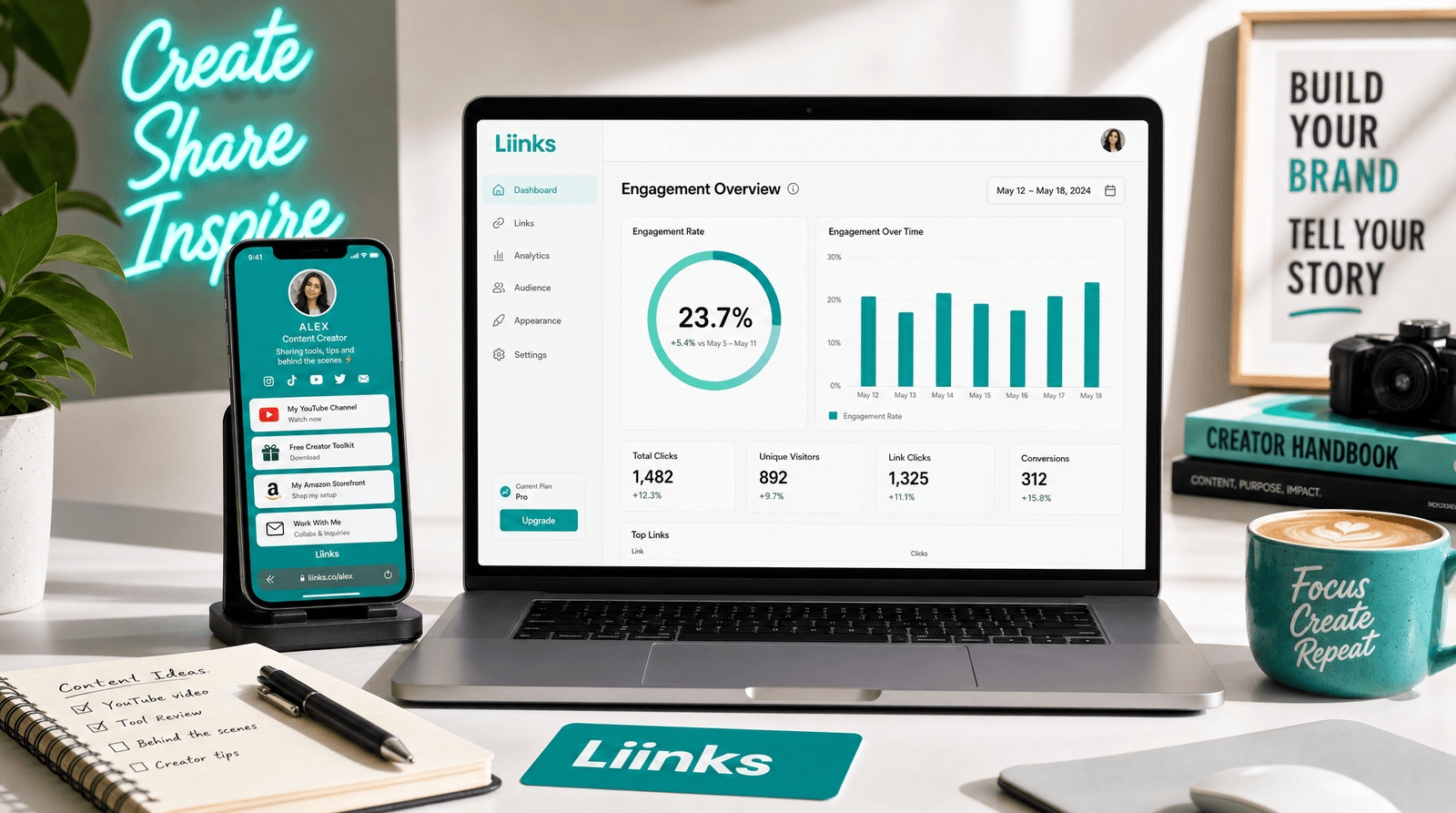
This is the one most people never look at, and it is the most useful. Anyone can watch a video passively. Clicking through to your page is a deliberate act. When someone taps your link in bio, that is a person choosing to leave the feed and come to you, which is the opposite of muting in every way that matters. Liinks analytics show you which links get tapped and how visits trend over time, and that curve is a far better proxy for real audience health than anything the follower count will ever tell you. If clicks hold steady or grow while your follower count balloons, you have a healthy core inside a noisy total. If clicks flatten while followers climb, you are collecting muted accounts.
Direct, unattributed traffic
Visits with no referrer usually mean someone pasted your link somewhere private. That is the strongest possible signal of a live relationship, because people do not recommend accounts they have muted. We wrote about that dynamic in the group chat is the new feed, and it is the flip side of this same coin. Muting is silent churn. Private sharing is silent loyalty. Both are invisible in your follower count, and both matter far more than it does.
Build something that cannot be muted
Once you accept that the feed relationship is fragile by default, the strategy gets clearer, and it is not "post more."
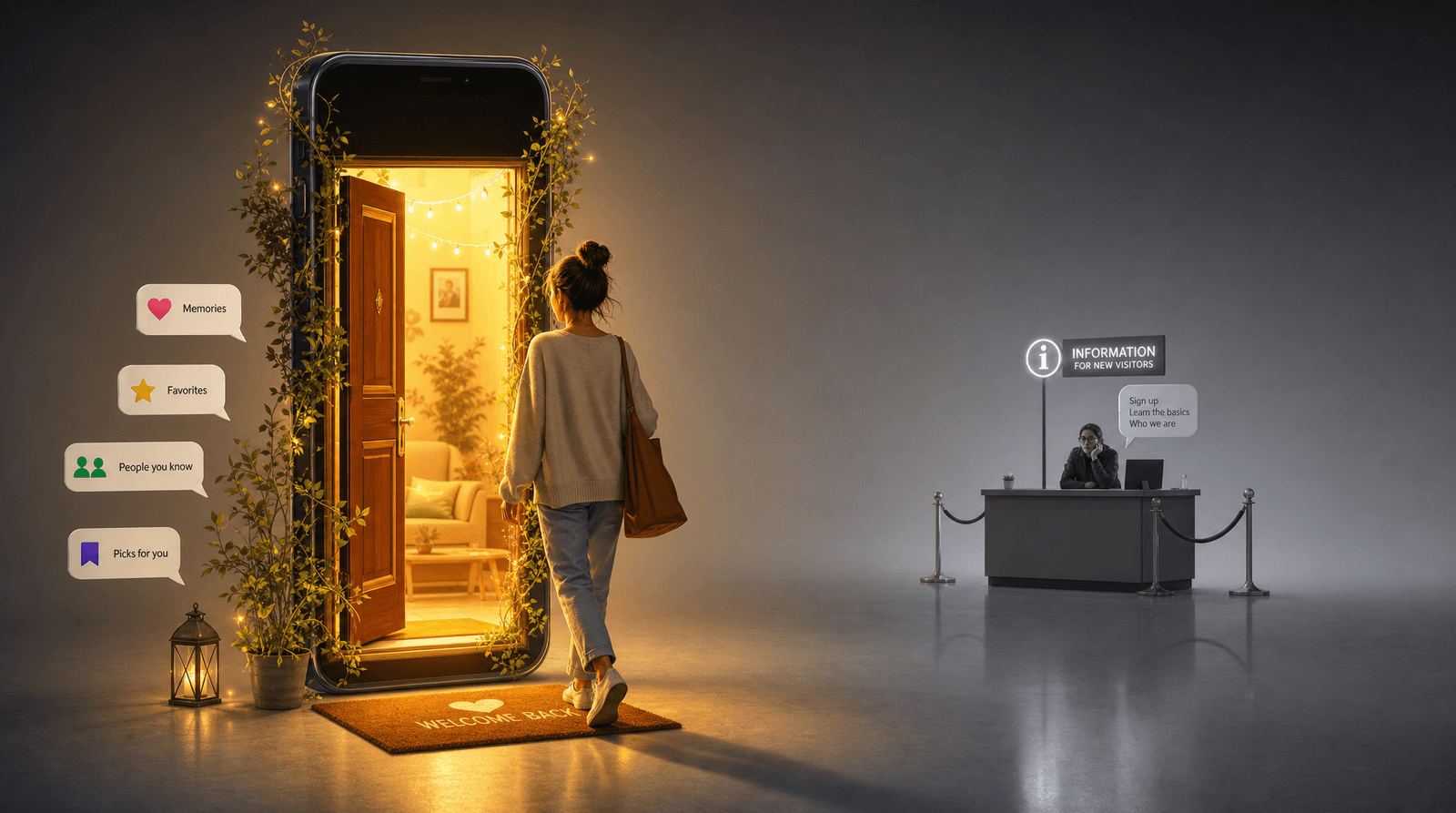
Move people to a channel they chose on purpose. A follow is cheap and reversible in silence. An email address, a text list, a Discord, a paid membership: these require a real decision, and they cannot be quietly throttled by an algorithm that noticed a lack of dwell time. Your link in bio is the bridge between the audience you rent and the audience you own, and its single most valuable job is converting the former into the latter. On Liinks, you can put a newsletter signup form directly on the page instead of bouncing people to a third-party landing page, which removes the exact step where most of these conversions die.
Give people a reason to come back rather than a reason to scroll. Mutes happen when an account becomes predictable in a bad way, usually because every post has the same ask. If the only thing you offer is another pitch, the mute is rational. Make your page somewhere worth revisiting: current work, a genuinely useful free thing, the answer to whatever question people keep asking you. A page that changes rewards the visit. A page that has not moved in eight months teaches people that checking was a waste of time.
Make the first thirty seconds count, because you may not get more. A lot of your visitors are not loyal fans. They are people who saw you once, in a feed, and are deciding right now whether you are worth their attention long-term. That is the whole argument behind the idea that nobody remembers your link in bio, and that's exactly the point. Clarity at the top, one obvious next step, and no wall of equally weighted buttons. Ambiguity is what makes people leave, and leaving now costs them nothing.
Prune your own asks the way people prune their feeds. If your audience has a limited tolerance for being sold to, spend it deliberately. Rotate what sits at the top of your Liinks page rather than stacking every offer you have ever made into one long scroll. Sections and button hierarchy exist so that the thing you care about this month is unmissable and the rest stays available without shouting. Fewer, better asks buy you more patience than a page that asks for everything at once.
Stop optimizing for the number that cannot go down. This is the mindset shift underneath all of it. A metric that only increases is not feedback, it is applause. Pick two or three numbers that are allowed to fall, watch them honestly, and let them tell you when something is drifting. Click-through on your page. Repeat visitors. Newsletter growth rate. Reply volume from real humans. Those numbers can hurt you, which is exactly what makes them worth tracking.
TL;DR
- The unfollow has been replaced by the mute. People leave your audience without leaving your follower count, so your most visible metric has become your least honest one.
- A follower count is cumulative, not current. It counts everyone who ever followed you and never bothered to undo it, including everyone who muted you last spring.
- Mutes leave fingerprints. Falling engagement rate, a shrinking share of reach coming from followers, and flat click-through on the page you own all point at silent churn.
- Clicks beat follows as a health signal. Tapping through to your page is a deliberate act. Muting is the absence of one. Track the deliberate acts.
- Build the relationship somewhere quieter to break. Email lists, memberships, and direct channels require a real decision to join and a real decision to leave, which is precisely why they are worth more than a follow.
The audience you can actually count
There is something clarifying about accepting that most of your followers are not really there. It stops you chasing a number that was never going to tell you the truth, and it points you at the much smaller, much more valuable group of people who keep choosing to show up.
Those are the people who tap the link. Who join the list. Who send your page to a friend with three words of context. You will never have as many of them as your profile says you do, and that is fine, because a thousand people who deliberately visit are worth more than a hundred thousand who muted you politely.
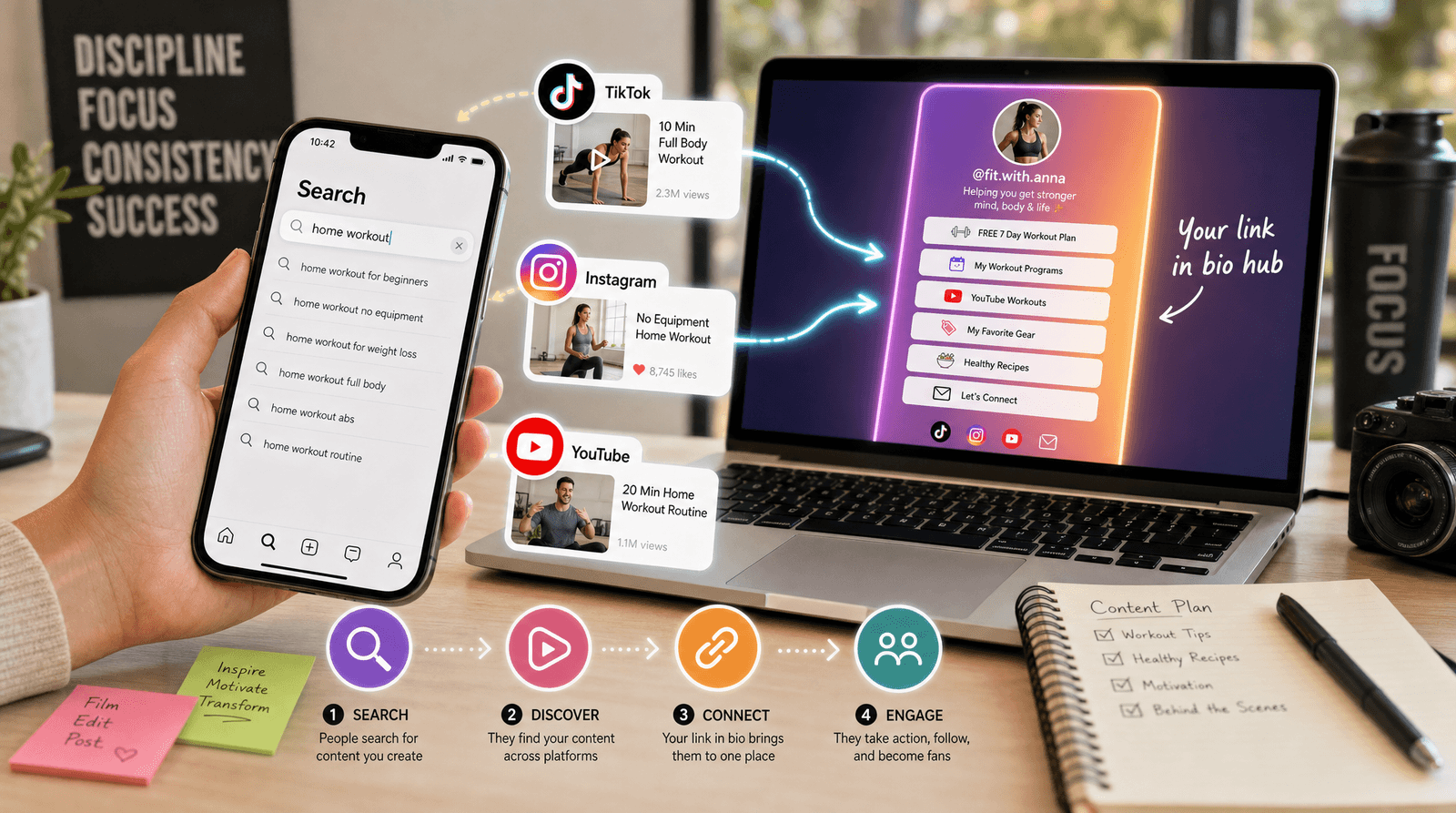
Your link in bio is where that group gets built. It is the one place where a passive scroller becomes an active visitor, and where an active visitor becomes someone you can reach without asking permission from an algorithm. Liinks gives you a fast, clean, on-brand page with a built-in newsletter form and analytics that show you who is actually engaging rather than who merely exists in your total. Build yours in a few minutes and start counting the audience that counts.