Nobody Remembers Your Link-in-Bio (And That's Exactly the Point)

Think about the last time you tapped "link in bio" on someone's Instagram post. You wanted something specific: a product page, a podcast episode, a signup form, a video. You tapped the link. You got what you wanted.
Now try to remember what that person's link-in-bio page looked like.
You can't. And that's not a failure of their design. That's a success.
The Destination Trap
There's a quiet epidemic in the creator world, and it sounds like this: "I need to make my link-in-bio page really stand out."
Stand out from what? From the other pages your visitors will never see, because they're already on yours? Your link-in-bio page doesn't compete with other link-in-bio pages. It competes with the back button.
The moment someone lands on your Liinks page, a clock starts ticking. They have a goal. They arrived with intent. Every second they spend admiring your layout, scrolling past decorative sections, or parsing clever button labels is a second closer to them giving up and swiping back to the feed.
This is the destination trap: treating your link-in-bio like a portfolio, a homepage, or an art project when its actual job is to be a hallway. People don't want to hang out in hallways. They want to get through them.
Bridges Don't Need to Be Beautiful
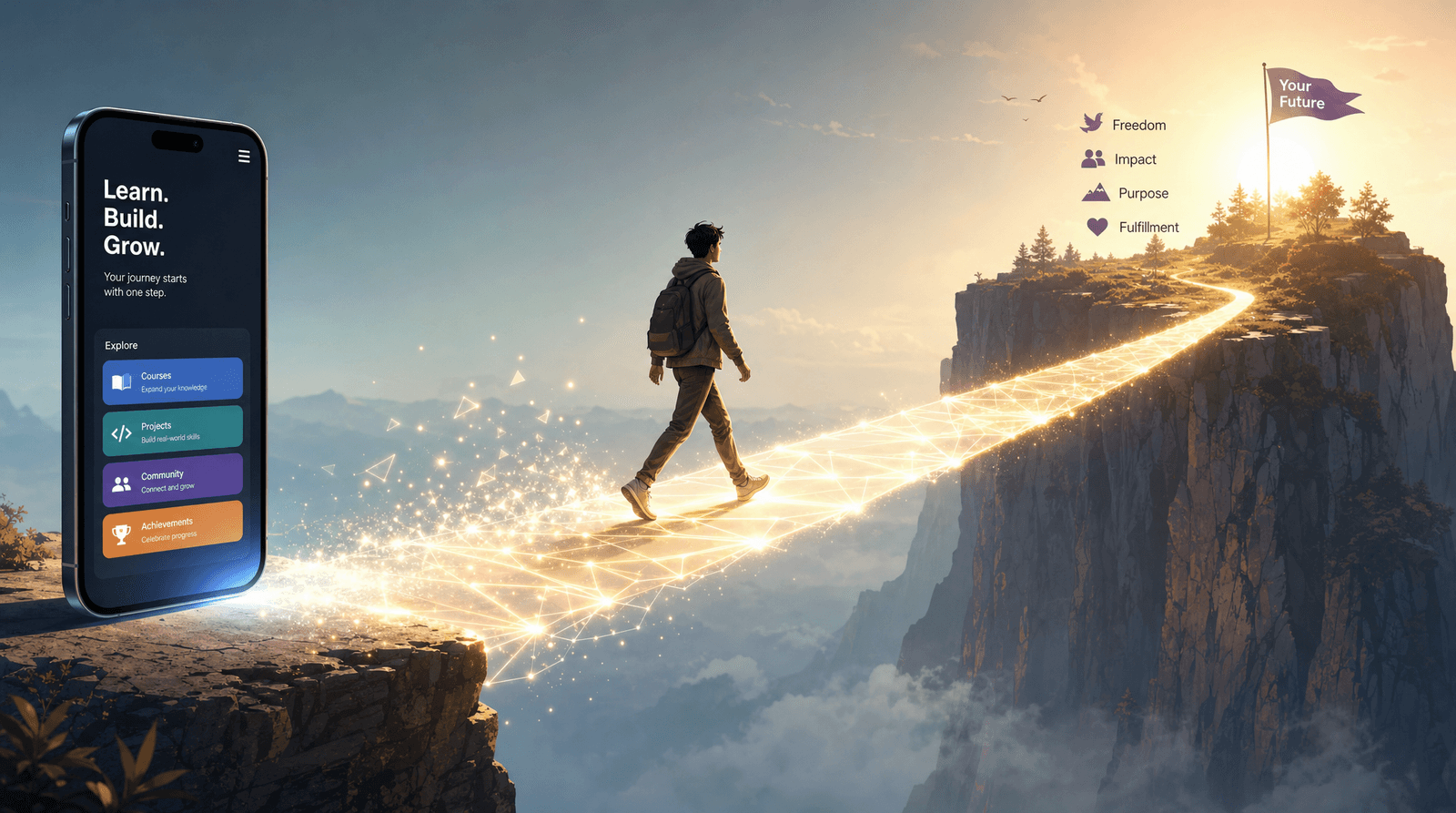
Here's a thought experiment. Imagine the best bridge you've ever crossed. Not the Golden Gate or Tower Bridge, those are tourist attractions that happen to also be bridges. Think about the best bridge you've crossed as a commuter. The one that got you from point A to point B without making you think about the crossing at all.
You can't picture it. Because it did its job perfectly.
The same principle applies to your link-in-bio page. The goal isn't to create a memorable experience. The goal is to create an invisible one. A page so clear, so frictionless, and so aligned with what the visitor wants that they pass through it like a doorway and barely register it happened.
This doesn't mean your page should be ugly. It doesn't mean you should strip out all personality. It means that beauty should serve speed, not compete with it. A clean layout with clear labels isn't boring. It's respectful of your visitor's time.
The Three-Second Contract
Every link-in-bio visit operates under what we'll call the three-second contract. Your visitor gave you exactly three seconds to prove that what they want is on this page. If they can't locate it in that window, they're gone.
Three seconds isn't enough time to read your bio. It's not enough time to appreciate your color palette. It's barely enough time to scan the first few buttons and decide if one of them matches the mental intent they arrived with.
This is why button ordering matters so much. The thing your visitor is most likely looking for should be the first thing they see. Not the thing you're most proud of. Not the thing you launched most recently. The thing that matches the context they're coming from.
If you just posted an Instagram story about your new course, the course link should be the first button. If your TikTok is blowing up with a specific product, that product link should be unmissable. Your page needs to mirror the intent that brought people there, and that intent changes constantly.
Design for Forgetting
This reframe changes everything about how you approach your Liinks page. Instead of asking "how do I make this page memorable?" start asking "how do I make this page disappear?"
Clear labels over clever labels. "Shop my favorites" is better than "The Good Stuff." "Book a call" is better than "Let's chat." When someone is scanning at speed, they're pattern-matching against plain language, not decoding your personality. Your personality already came through in the content that sent them here.
Fewer sections, not more. Every section on your page is a decision point. Every decision point is friction. Every friction point is a chance for someone to bounce. If you have ten sections and your visitor wants the third one, they have to process and skip two sections to get there. That's cognitive load disguised as comprehensiveness. We've written before about how many links you actually need, and the answer is almost always fewer than you think.
Context-aware ordering. The best link-in-bio pages aren't static. They shift based on what's happening. Running a launch? Lead with the launch. Growing your email list? Lead with the signup. Between campaigns? Lead with your evergreen best-performer. Liinks lets you reorder sections in seconds for exactly this reason.
The Paradox of Good Design
Here's where it gets counterintuitive. The pages that look the "best" in a screenshot often perform the worst in practice. A page with a beautiful gradient background, custom icons, a photo header, and animated sections might look incredible when you share it with your designer friends. But it loads slower. It creates visual noise. It buries the buttons under aesthetic choices.
Meanwhile, the page with a clean background, standard-sized buttons, legible fonts, and generous spacing? It converts better. Not because it's ugly, but because it puts function first. The design is in service of the goal, not in competition with it.
Think of it like a restaurant menu. The best menus aren't works of art. They're organized, scannable, and they make ordering easy. The fancy leather-bound menus with no prices and cryptic descriptions might feel premium, but they make people anxious. Your link-in-bio page is a menu. Make ordering easy.
What Frictionless Actually Looks Like
So what does a "forgettable" link-in-bio page look like in practice? Here's the checklist:
Above the fold, the answer is obvious. Without scrolling, your visitor can see the 2-3 most important links. The labels are plain English. The visual hierarchy makes the primary action unmissable.
Nothing competes with the buttons. Your profile photo, bio text, and social links are present but subdued. They provide context, not distraction. The buttons are the stars.
Dead links and stale content are gone. Nothing kills trust faster than clicking a link that goes nowhere or landing on a page that says "coming soon." If you wouldn't send someone there today, remove the button today.
The page loads instantly. Heavy images, complex layouts, and third-party embeds slow your page down. On mobile (where 90%+ of your link-in-bio traffic lives), a one-second delay in load time can cut conversions by 20%. Speed is a design choice.
It matches the energy of where they came from. If your Instagram aesthetic is warm and minimal, your link-in-bio page shouldn't be neon and chaotic. Visual continuity reassures visitors they're in the right place. They don't notice when it's there, but they notice when it's not.
Ego vs. Effectiveness
Let's be honest about why this advice is hard to follow. Your link-in-bio page feels personal. It's your name at the top. It's your photo. It's a reflection of your brand. So when someone says "make it simpler," it feels like they're saying "make it less you."
But that's the ego talking, not the data. Your visitors didn't come to experience your page. They came to get somewhere. The most generous thing you can do for them is to get out of their way. And the most strategic thing you can do for yourself is to make the path from "I'm interested" to "I'm committed" as short as possible.
The creators who convert best aren't the ones with the most impressive pages. They're the ones who understand that good design is invisible. Their pages feel effortless because they've done the hard work of editing, prioritizing, and simplifying.
TL;DR
Your link-in-bio page isn't a destination. It's a bridge. The best bridges are the ones you cross without noticing. Stop optimizing for "wow" and start optimizing for "done." Clear labels, smart ordering, fewer sections, and a relentless focus on matching visitor intent will always outperform a beautiful page that makes people think. Design for forgetting, and your visitors will remember you for what was on the other side.
Make It Disappear
Liinks is built for speed and clarity. Clean layouts, instant load times, drag-and-drop reordering, and built-in analytics so you can see exactly where people are going after they land. Build a page your visitors will forget in the best possible way. Try Liinks for free and see what happens when you stop designing for impressions and start designing for action.