From “Link in Bio” to Lead Magnet: How to Turn Curious Clicks into Qualified Clients with Liinks

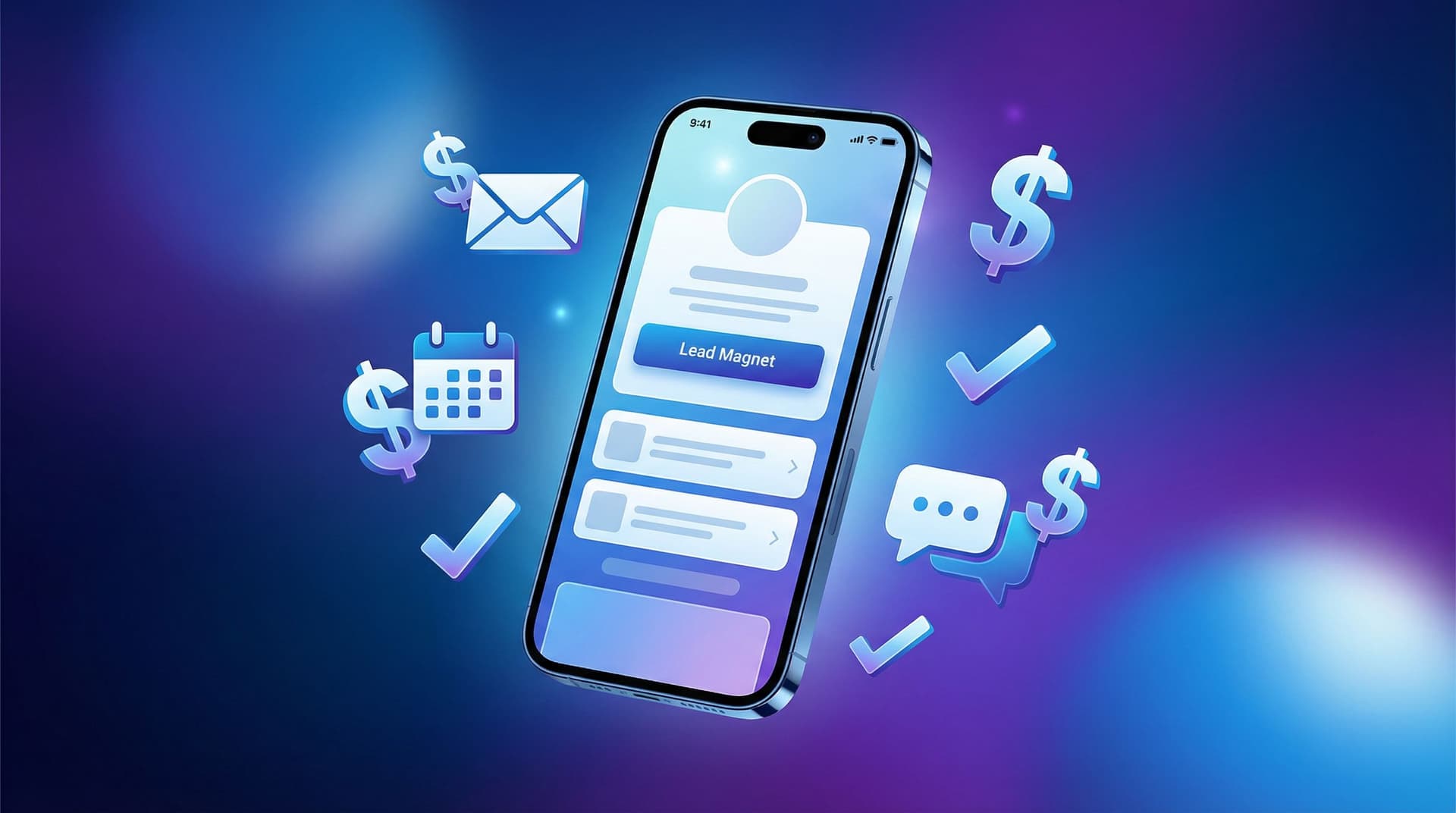
Your bio link is doing one of two things right now:
- Gently escorting people to a random list of links.
- Quietly qualifying your best prospects and sending them straight into your offers, inbox, or calendar.
If you’re here, odds are it’s doing more of #1 than #2.
The good news? Turning that “link in bio” into an actual lead magnet doesn’t require a full website rebuild, a funnel agency, or a three-week tech spiral. It just takes a bit of intention—and a tool that doesn’t fight you on design or flexibility. Enter Liinks, the link-in-bio tool built for creators who want their page to actually look good and convert.
Let’s walk through how to turn those curious profile taps into qualified, ready-to-work-with-you clients.
Why Your Bio Link Might Be Killing Your Leads (Quietly)
People don’t click your bio link because they’re bored. They click because they’re curious.
They’ve just watched your Reel on podcast strategy, or your TikTok on skincare routines, or your YouTube breakdown of how you scaled a client to $50k/month. When they tap your bio link, they’re basically saying:
“Okay, prove you’re the real deal—and show me what to do next.”
Here’s where most creators lose them:
- Too many options. A chaotic list of 15+ links (“New vlog,” “My Amazon storefront,” “Random blog from 2021”) makes people freeze.
- No clear next step. You want clients, but your top link is “Read my latest post,” not “Book a discovery call” or “Get my free starter kit.”
- Zero qualification. Anyone can click. Only a few are actually a fit. Your page should help separate “just browsing” from “ready to invest.”
- Off-brand or generic design. If your page looks nothing like your content, trust drops. And trust is what gets people to fill out forms, share info, and book calls.
A lead-magnet-style bio link fixes all of this by doing three things:
- Captures attention with a clear, visually on-brand page.
- Offers something irresistible in exchange for an email or micro-commitment.
- Guides serious people toward a next step that actually leads to revenue (applications, calls, bookings, purchases).
Step 1: Decide Exactly What a “Lead” Means for You
Before you start rearranging buttons on your Liinks page, get painfully clear on what a “lead” even is in your world.
For service-based creators, a lead is usually one of these:
- Someone who books a discovery call
- Someone who fills out a project/application form
- Someone who downloads a targeted free resource that clearly relates to your paid offer (not a random checklist you made three years ago)
Ask yourself:
- If someone is a perfect-fit client, what’s the one thing I’d love them to do after clicking my bio link?
- What small step could they take that shows real intent (not just curiosity)?
That one thing becomes the primary goal of your Liinks page. Everything else is supporting cast.
Step 2: Build a Lead Magnet That Attracts the Right People (Not Everyone)
A lead magnet is just a fancy name for “something valuable enough that people will happily trade their email or time for it.”
But here’s the key: good lead magnets repel the wrong people.
Instead of “Free Social Media Guide,” think:
- “Client-Ready Instagram Bio Template for Fitness Coaches”
- “Podcast Launch Checklist for Busy Founders (Under 5 Hours/Week)”
- “Done-For-You Caption Starter Pack for Wedding Photographers”
The more specific your lead magnet, the more likely it is that people who grab it are actually the type of clients you want.
What makes a great lead magnet for your Liinks page?
Aim for something that:
- Solves a tiny but painful problem your ideal client has right before they hire you.
- Naturally leads to your paid offer. If your service is high-ticket brand strategy, your lead magnet shouldn’t be “30 Canva Fonts I Like.”
- Is fast to consume. Think checklists, templates, scripts, short trainings—not 78-page ebooks.
Examples:
- A copywriter: “5 Plug-and-Play Homepage Hooks to Double Your Inquiries”
- A fitness coach: “7-Day Strength Starter Plan for Desk Workers”
- A brand designer: “Brand Moodboard Starter Kit for New Founders”
Set this up in your email service (e.g., ConvertKit, Flodesk, Mailchimp) with a simple opt-in form and delivery email. Then we’ll plug it into Liinks.
Step 3: Turn Your Liinks Page into a Mini Lead Funnel
Now we connect the dots. Your Liinks page becomes the bridge between “I liked that video” and “I’m on your calendar.”
Here’s a simple structure that works for most creators and service providers:
- Hero area: One clear promise + one primary action
- Lead magnet: Your main freebie as the star of the show
- Proof & pathways: Social proof + secondary actions for warm visitors
1. Nail your hero section
Use your page title and short description to answer three questions fast:
- Who you help
- What you help them do
- What they should do next
For example:
I help online fitness coaches sign 3–5 new clients/month without paid ads.
Start here: grab the free DM script that books sales calls in 10 minutes a day.
That “start here” line points straight to your lead magnet.
2. Make your lead magnet the main event
Your top button on Liinks should be:
- Visually distinct (use a standout color or button style)
- Specific in copy (no “Sign up” or “Free guide” vagueness)
- Aligned with your main offer
Examples of high-converting button copy:
- “Get the Free Client-Booking DM Script”
- “Download the Brand Strategy Starter Kit”
- “Steal My 7-Day Launch Email Swipe File”
If you want more ideas, we’ve rounded up real-world examples in Steal These High-Converting CTAs: Real-World Liinks Button Copy That Gets the Click.
Connect this button to your email opt-in page or embedded form. That’s your lead capture moment.
3. Add proof and pathways for warmer leads
Under your main lead magnet, add 3–5 supporting links that help visitors self-qualify:
- “Work With Me” – overview of your services or a simple one-page offer.
- “Client Results & Case Studies” – this can be a highlight reel, Google Doc, or portfolio page.
- “Book a Discovery Call” – link to Calendly, SavvyCal, Acuity, etc.
- “Start Here” content – one or two cornerstone pieces that best represent your work.
The order matters. People should see:
- Lead magnet
- Proof you’re legit
- Ways to engage deeper (calls, applications, store, etc.)
For more ideas on arranging these links so they guide different types of followers to the right next step, check out One Link, Many Offers: How to Turn Your Liinks Page into a Mini Funnel for Every Type of Follower.
Step 4: Use Micro-Qualification So Only the Right People Reach You
Leads are great. Qualified leads are better.
You don’t want 50 people booking calls if only 3 of them are even close to a fit. Your Liinks page can quietly filter people before they hit your inbox.
Add a pre-qualifying layer
Instead of sending people directly to “Book a Call,” send them to:
- A short application form (Google Form, Typeform, Tally, etc.)
- Or a “How I Work” page that spells out who you’re for, pricing ranges, and timelines
On that page or form, ask questions like:
- What best describes you right now? (multiple choice)
- What are you hoping to achieve in the next 3 months?
- What’s your approximate budget for this project?
Then your Liinks button becomes:
- “Apply to Work With Me” instead of “Book a Call”
That one word shift sets a different tone—and tells people this isn’t a casual coffee chat.
Use your freebie to pre-sell
Design your lead magnet so it naturally leads to your paid offer:
- End your checklist or template with: “If you want help implementing this, here’s how we can work together.”
- Add a soft CTA in your freebie delivery email: “If you’re reading this and thinking ‘I’d rather you just do it for me,’ hit reply with ‘DONE FOR ME’ and I’ll send details.”
Your bio link started the journey; your lead magnet finishes the job of warming them up.
Step 5: Make Your Page Look Like Someone Worth Hiring
People absolutely judge your professionalism by how your link-in-bio looks.
You don’t need a full brand kit, but you do need:
- Consistent colors that match your socials, site, or content.
- Readable fonts (save the experimental scripts for your logo, not your buttons).
- Clean spacing so your most important links don’t get buried.
Because Liinks is fully customizable, you can:
- Match your background color to your brand palette.
- Use imagery or a profile photo that feels like your content.
- Group related links so your page feels intentional, not like a link graveyard.
If you want a deeper design walkthrough, we break it down in Template to Signature Look: How to Design a Liinks Page That Feels Uniquely ‘You’ in Under an Hour.
Step 6: Connect the Dots from Content → Click → Client
A lead-magnet-style Liinks page only works if people… actually see it.
Here’s how to connect it to your daily content without sounding like a broken record.
1. Create content that tees up your lead magnet
Instead of “New post, go read,” try:
- “If you’re stuck writing your own homepage, I made 5 plug-and-play hooks you can steal—grab them via the link in my bio.”
- “Want to see the exact 7-day plan I use with new clients? It’s free—hit the link in my bio and look for the first button.”
Each piece of content should:
- Agitate a specific problem.
- Hint that you have a solution.
- Point clearly to your lead magnet as the next step.
2. Align your top link with what you’re posting
If you’re running a launch, promo, or seasonal push, swap your top link to:
- A launch-specific lead magnet
- A waitlist signup
- A limited-time offer
You can keep your evergreen lead magnet just below it for ongoing list growth. If you want ideas on using Liinks for launches and promos, The Ultimate Launch Checklist: Using Liinks to Maximize Hype on Drop Day is a great next read.
3. Track what’s actually working (without becoming a data goblin)
You don’t need to obsess over every metric, but you do want to know:
- Which buttons get the most clicks
- Which lead magnet links are actually being used
- Whether people prefer “Apply to Work With Me” vs “Book a Call”
That’s where your Liinks analytics come in. Start simple:
- Keep your top 3–5 links stable for at least a couple of weeks.
- Check which ones actually get tapped.
- Promote the winners more; retire or tweak the duds.
If analytics usually make your eyes glaze over, we put together a no-fluff guide: Analytics Without the Headache: The Only Liinks Metrics Creators Actually Need to Track.
Step 7: Turn New Leads into Real Conversations
Once someone opts in, the lead magnet has done its job. Now your follow-up does the heavy lifting.
Pair your Liinks-powered lead capture with a simple email sequence:
- Delivery email – send the freebie, set expectations, and share 1–2 lines about who you help and how.
- Story email – share a short client story or your own before/after related to the freebie topic.
- Value email – give one quick win they can implement today.
- Invitation email – invite them to apply, book a call, or reply with a specific word if they want more help.
Keep it simple, human, and specific. The goal is not to impress them with automation—it’s to make it obvious you understand their problem and have a clear path forward.
Quick Checklist: Is Your Liinks Page Set Up Like a Lead Magnet?
Run through this in five minutes:
- My page has one main goal (grow list, book calls, get applications).
- My top button is a specific, relevant lead magnet.
- I have clear, specific button copy (no vague “Learn more”).
- I use supporting links for proof (case studies, results, portfolio).
- My “Work With Me” or “Apply” link includes basic qualification.
- My design feels consistent with my social content.
- My content regularly points to my lead magnet, not just my homepage.
If you can tick these off, your “link in bio” is no longer a courtesy—it’s part of your client acquisition system.
TL;DR: Your Bio Link Can Be a Quiet, Effective Lead Machine
You don’t need a giant funnel or a custom-coded site to turn clicks into clients. You need:
- A clear definition of what a lead means for you.
- A specific, problem-solving lead magnet that attracts the right people.
- A Liinks page structured like a mini funnel, not a link dump.
- Simple qualification steps so only good-fit people reach your inbox.
- Consistent content that points people to your lead magnet.
- Light-touch analytics to double down on what’s working.
Do that, and your bio link stops being a polite “here’s everything I do” and becomes a focused, on-brand, always-on lead magnet.
Ready to Turn Your Link in Bio into a Lead Magnet?
If your current bio link feels more like a junk drawer than a client pipeline, this is your sign to fix it.
Here’s your next move:
- Draft one simple, specific lead magnet idea that directly supports your main offer.
- Set up a clean, on-brand page with Liinks and make that lead magnet your top button.
- Add one proof link and one “Work With Me” or “Apply” link underneath.
- Record or write one piece of content that drives people to that new setup.
You don’t need to build the perfect funnel. You just need to give your best prospects a clear, easy path from “curious click” to “qualified client.”
Start your Liinks page and let that tiny URL finally pull its weight.