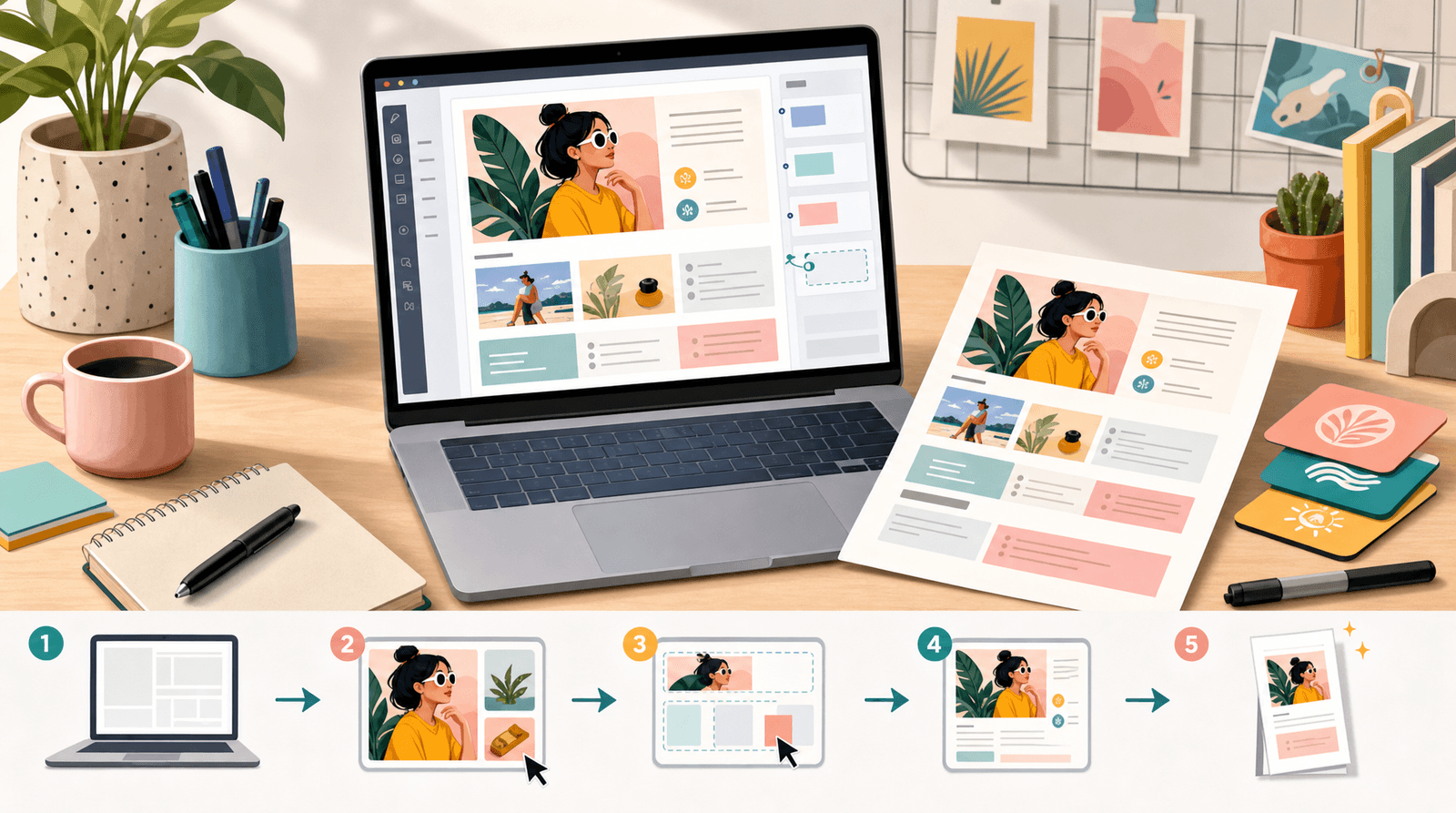
How to Grow Your Substack With Your Link in Bio

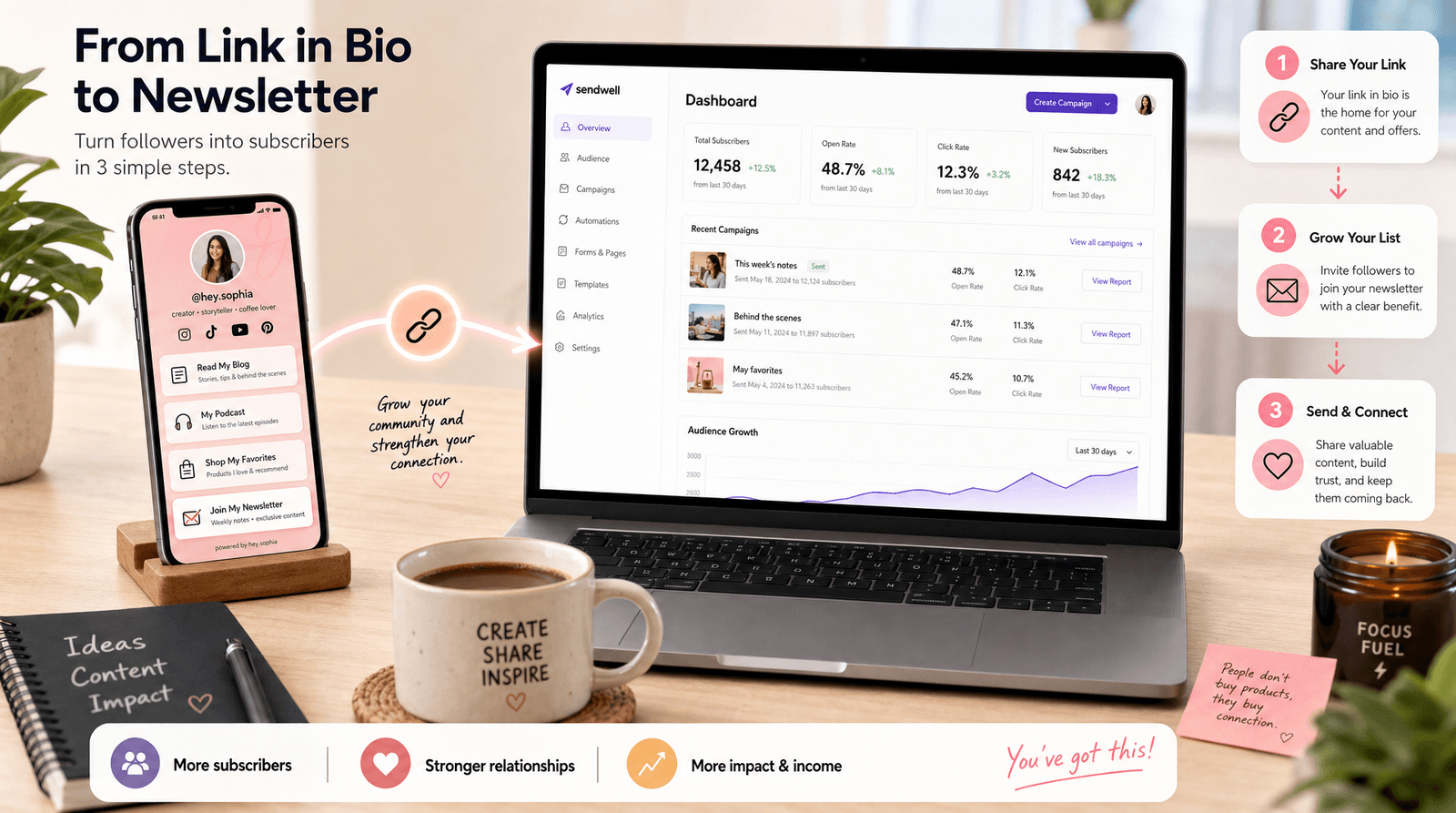
Here's the awkward truth about growing a Substack: the platform that hosts your newsletter is not the platform where your audience actually is. Your readers are scrolling Instagram, watching TikToks, replying to Threads, and half-listening to a podcast. Your subscribe page is a URL sitting quietly somewhere none of those apps will let you link to directly.
That gap is where most newsletters stall. You publish something great, a few hundred people read it, and the growth just... flattens. Not because the writing is bad, but because there's no bridge between the place people discover you and the place they can subscribe.
Your link in bio is that bridge. It's the one clickable link every social platform gives you, and it's the single most underused asset in newsletter growth. Below is a practical, step-by-step guide to turning your Liinks page into a Substack subscription machine, so the attention you're already earning stops leaking away.
Why the link in bio beats posting your Substack URL
Before the how-to, it's worth being clear on why this works, because it changes how you set it up.
On most social platforms you cannot put a working link in a caption, a comment, or a video. Instagram strips them. TikTok makes them unclickable in captions. Even on platforms that allow links, a raw yourname.substack.com in a post gets buried the moment you publish something new. So creators end up saying "link in bio" out loud and hoping people go hunting for it.
The problem is what happens after the tap. If your link in bio dumps someone straight onto your Substack homepage, they land on your latest post, or an archive, or a paywall, and the actual subscribe box is somewhere below the fold. That's a lot of friction for someone who was just curious.
A well-built link-in-bio page fixes this by doing three things a raw Substack URL can't:
- It gives the newsletter a permanent, prominent home that doesn't get pushed down every time you publish.
- It lets you capture the email right there, before someone has to leave for a second site and make a second decision.
- It tells you where your subscribers actually came from, so you stop guessing which platform is worth your time.
Keep those three jobs in mind. Everything below is just execution.
Step 1: Give your newsletter a dedicated spot, not a buried one
Open your Liinks page and add a section specifically for the newsletter. Not a link tossed in among fifteen others: a labeled section that says exactly what someone gets.
The mistake most people make is treating the Substack link like every other button. It becomes "My Newsletter" sitting between "Shop" and "TikTok," visually identical, easy to skip. Instead, use Liinks' sections to group it and give it a short header that sells the outcome, not the format. "Get my weekly 3-minute breakdown" beats "Newsletter" every time.
A few placement rules that consistently move the needle:
- Put it near the top. We've written before about how link order and the click curve decide what people actually tap — the short version is that attention drops fast as people scroll, so anything you care about belongs above the fold.
- Say what they get and how often. "One short essay every Sunday" sets an expectation and lowers the perceived cost of subscribing.
- Make it visually distinct. Use a different button color or a featured section so the eye lands on it first. Liinks lets you customize button styles per link, so the newsletter doesn't blend into the wall of gray.
The goal is that a first-time visitor, three seconds in, knows you have a newsletter, knows roughly what it's about, and knows it's the thing you'd most like them to do.
Step 2: Capture the email on the page, before they ever reach Substack
This is the step that separates a good setup from a great one.
You have two options for the sign-up itself, and they suit different goals.
Option A: Link straight to your Substack subscribe page. Simple and fast. The tap sends people to Substack, they enter their email there, done. The tradeoff is the handoff: every extra page and extra decision loses a percentage of people. It works, but it leaks.
Option B: Collect the email directly on your Liinks page. Liinks includes built-in forms, so you can add an email field right on your bio page. Someone types their address without ever leaving, and it lands in your Liinks Contacts list. You then have a warm email you own outright, which you can import into Substack (or any newsletter tool) and welcome on your own terms.
Option B almost always converts better, because you're removing the single biggest drop-off point: the jump to a second website. The person who would've bounced on the handoff instead gives you their email in one motion.
Whichever you choose, keep the ask tiny. One field: email. Every extra box (name, "how did you hear about us," a checkbox) shaves off conversions. You can always learn more about subscribers later; right now the only job is getting the address.
If you want to go deeper on the mechanics of turning passive followers into subscribers, we broke the whole flow down in Newsletter Growth on Autopilot. This post is the setup; that one is the strategy.
Step 3: Give people a reason to subscribe today
A link that says "Subscribe to my newsletter" is asking for a favor. A link that says "Get the free 5-email onboarding course" is offering a trade. The second one wins, because it answers the only question a new visitor is really asking: what's in it for me, right now?
You don't need a fancy lead magnet. A few that work well and take an afternoon to make:
- A short guide or checklist related to what you write about. A cooking newsletter offers a "10 pantry staples" PDF; a marketing newsletter offers a "cold email template."
- A greatest-hits link. Point people to your three best past issues so they can sample the writing before committing. Curiosity does the rest.
- A clear cadence promise. Sometimes the incentive is just trust: "No spam, one email a week, unsubscribe anytime." For a skeptical audience, that reassurance is the offer.
Put this incentive right in the section header or the button label on your Liinks page. The tap and the reason to tap should live in the same eyeful. This is the same principle behind building a high-intent link in bio that attracts people ready to act: you're not trying to convert everyone, you're trying to make the right people move.
Step 4: Point every platform at the same place
Now connect the sources. Your Liinks URL should be the destination in every bio you have: Instagram, TikTok, Threads, YouTube, X, your podcast description, your email signature. One link, everywhere, so no matter where someone finds you, the path to your newsletter is identical.
This is the quiet superpower of a link in bio. You don't have to reconfigure anything when a platform changes its rules or when you start posting somewhere new. You update your Liinks page once, and every bio that points to it updates too. Your Substack keeps its home even as your social footprint shifts around it.
A few ways to actively drive taps rather than waiting for them:
- End videos and posts with a specific ask. Not "link in bio," but "the full breakdown is in my newsletter: link in bio." Name the payoff.
- Pin it. Most platforms let you pin a post or comment. Pin one that points to the newsletter.
- Mention it in context. When a piece of content clearly relates to something you've written at length, say so. "I go deep on this every week" is a natural nudge, not a sales pitch.
Step 5: Watch which platform is actually working
Here's where a lot of creators fly blind. You're posting on five platforms, subscribers are trickling in, and you have no idea which effort is paying off. So you keep spreading yourself thin across all five.
Because everything now routes through your Liinks page, the built-in analytics show you which links get tapped and, crucially, where the traffic is coming from. You might discover your slow, unglamorous Threads posts drive more newsletter sign-ups than the reels you spend hours on. Or that your podcast shownotes quietly out-convert everything.
That's the data that lets you stop guessing and start concentrating. Double down on the platform that actually feeds the newsletter, and stop pouring hours into the one that doesn't. Over a few weeks, this single habit, checking where subscribers come from and adjusting, compounds harder than any individual piece of content.
For a fuller picture, you can also connect Google Analytics or a pixel to your Liinks page, but honestly, for most creators the built-in view is enough to answer the only question that matters: which platform should I spend more time on?
TL;DR
- Your Substack lives where people can't click; your link in bio lives where they can. Connecting them is the highest-leverage move for newsletter growth.
- Step 1: Give the newsletter a dedicated, near-the-top section on your Liinks page, with a header that sells the outcome, not the word "newsletter."
- Step 2: Capture the email directly on your page with a built-in form so nobody has to make the leap to a second site. Fewer steps, more subscribers.
- Step 3: Offer a reason to subscribe today — a small guide, a greatest-hits link, or a clear no-spam promise.
- Step 4: Point every social bio at the same Liinks URL so the path to your newsletter is identical everywhere.
- Step 5: Use analytics to see which platform actually drives sign-ups, then double down on it.
Start turning followers into subscribers
Your newsletter doesn't have a discovery problem. It has a bridge problem: plenty of people find you, but too few ever reach the place they can subscribe. A link-in-bio page is the bridge, and it takes about fifteen minutes to build.
Create your free Liinks page, add a newsletter section with a built-in sign-up form, point every bio at it, and let the analytics tell you where your next hundred subscribers are hiding. The attention is already yours. This is just how you keep it.